
Research Article Summary
• Primary focus:
This article investigates how low doses of ionizing radiation affect cellular stress responses, particularly focusing on oxidative metabolism, DNA damage signaling, and how cells balance damage and repair at dose levels far below those associated with acute toxicity.
• Oxidative stress and signaling:
The authors describe how low-dose radiation can generate reactive oxygen species (ROS) within cells. At low doses, ROS act as signaling molecules, initiating cascades that trigger protective responses — such as activation of antioxidant enzymes and stress response pathways — rather than simply accumulating damage.
• Adaptive and compensatory mechanisms:
Evidence reviewed in the article suggests that cells exposed to low doses of radiation engage adaptive responses that enhance DNA repair capacity and modulate apoptotic pathways. These mechanisms help maintain genomic integrity and overall cellular homeostasis.
• Non-linear biological behavior:
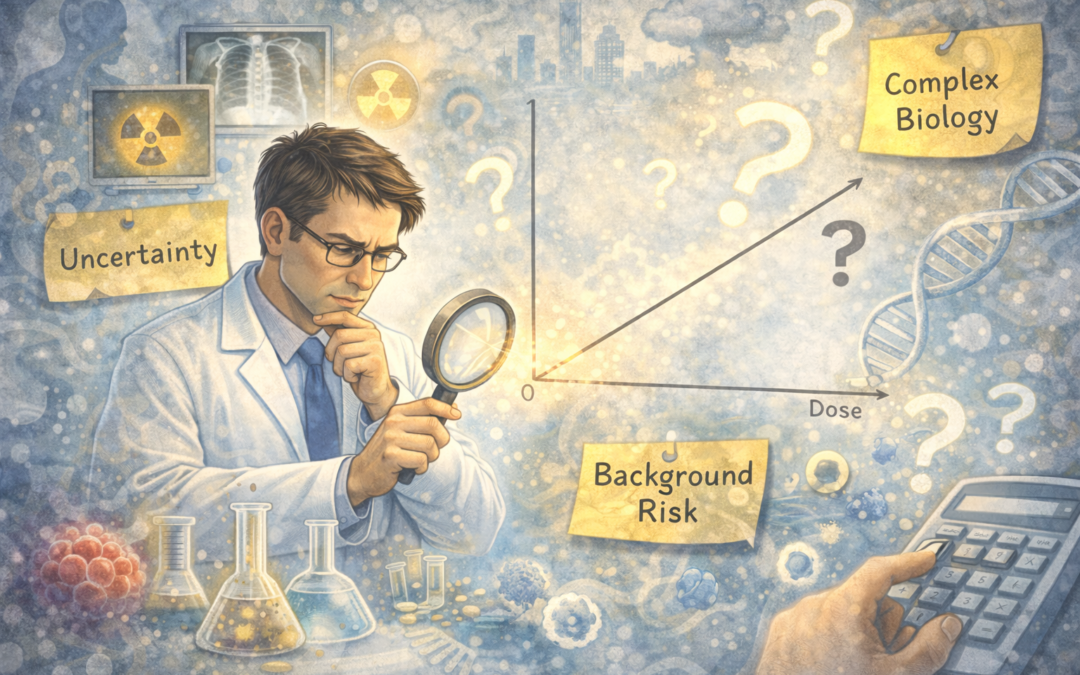
The findings indicate that biological responses at low doses are often non-linear. Rather than scaling damage proportionally with dose, cellular outcomes depend on complex interactions among signaling networks, repair systems, and metabolic regulation.
• Implications for risk assessment:
Because low-dose exposures trigger dynamic and context-dependent biological processes, the study challenges the notion that risk increases linearly with dose. This suggests that radiation protection models based purely on linear extrapolation from high doses may oversimplify actual biological responses at low exposure levels.
Please click here to read the full research article:
https://www.sciencedirect.com/science/article/abs/pii/S0013935117312562 ←