
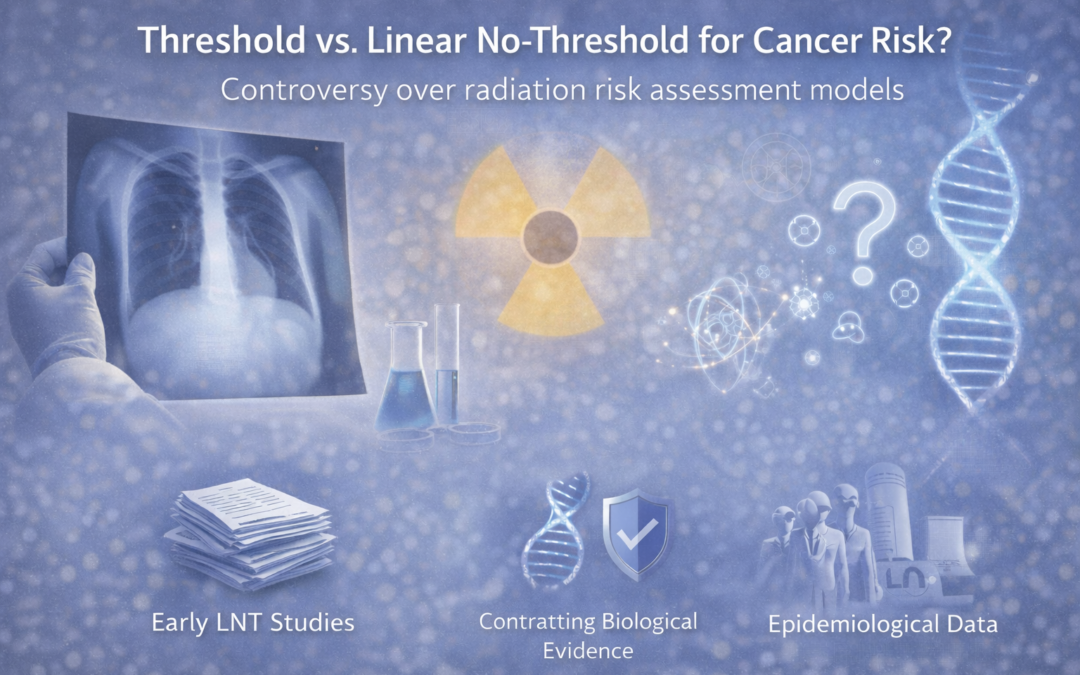
Research Article Summary
• Primary focus:
This article examines the relationship between medical imaging radiation dose and cancer risk, evaluating how radiation exposure from diagnostic procedures such as CT scans is quantified and what the evidence shows about associated long-term health effects.
• Risk estimation challenges:
The authors discuss how radiation doses from medical imaging are measured and compared to background exposures. They highlight that while individual imaging procedures deliver significantly higher doses than natural background radiation, assessing small increases in cancer risk is complicated by confounding factors like the patient’s underlying medical condition, age, and concurrent exposures.
• Epidemiological evidence:
The article reviews available epidemiological studies that attempt to associate diagnostic imaging with cancer outcomes. It emphasizes that many studies suffer from methodological limitations, including lack of accurate dose reconstruction, short follow-up times, and inability to control for confounders, making causal inference at low doses uncertain.
• Biological mechanisms:
Given the complexity of cellular responses to ionizing radiation, the piece suggests that risk models based simply on dose magnitude may not capture how biological repair systems and adaptive responses influence long-term outcomes. This has implications for interpreting small risk estimates at diagnostic dose levels.
• Clinical context and communication:
The authors stress that while radiation risk should not be ignored, it must be balanced against clinical benefits of imaging. In many cases, diagnostic information from CT and other modalities provides essential data that directly influences patient care. Clear communication about relative risks and benefits is crucial for informed decision-making.
Please click here to read the full research article:
https://www.ajronline.org/doi/10.2214/AJR.12.10011 ← original research article