
Research Article Summary
-
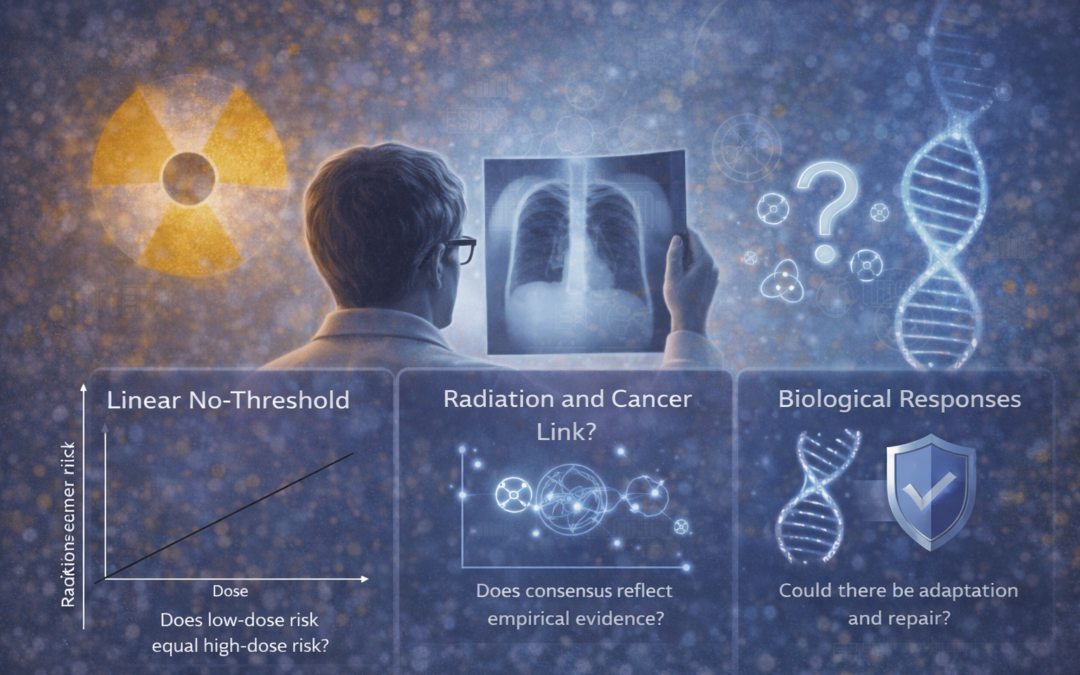
The article critically examines the longstanding international consensus linking low-dose ionizing radiation to increased cancer risk, arguing that the prevailing linear no-threshold (LNT) model lacks solid empirical support at low exposure levels.
-
It reviews historical and modern radiobiological evidence suggesting that biological systems have evolved under natural background radiation and exhibit adaptive responses, including efficient DNA repair mechanisms and potential hormetic benefits.
-
The review highlights inconsistencies in epidemiological data used to justify the LNT model, noting that many low-dose exposure cohorts do not demonstrate statistically significant increases in cancer incidence when confounding factors are carefully controlled.
-
Comparative analyses with populations exposed to higher natural or artificial low-dose radiation levels reveal mixed or neutral cancer outcomes, challenging the universality of linear risk projections for all dose ranges.
-
The authors conclude that continued reliance on the LNT model in international radiation protection policy may misrepresent actual risk at diagnostic and environmental dose levels, and they advocate for risk assessment frameworks that better reflect biological complexity and dose thresholds supported by empirical evidence.