

How Medical Radiation Quietly Saves Lives Every Day
Radiation is usually framed as something dangerous, something to fear, regulate, or avoid whenever possible. In medicine, radiation based technologies are a daily, practical tool that helps doctors diagnose disease, guide treatment, and save lives. Millions of patients benefit from radiation-based technologies every year. Most never think twice about it, that alone should tell us something. What follows is a clear look at the most commonly used medical radiation technologies, presented in order of how familiar and widely used they are, and what they actually contribute to human health.

CT Scans: Diagnostic Power That Saves Lives
Computed Tomography (CT) scans are one of the workhorses of modern medicine. They are fast, widely available, and extraordinarily informative. Few technologies have changed emergency and diagnostic care as profoundly. In trauma settings, CT scans routinely identify internal bleeding, head injuries, organ damage, and strokes within minutes. That speed matters. In many cases, a CT scan determines whether a patient goes directly to surgery, receives targeted treatment, or avoids an invasive procedure altogether.
CT imaging is also central to cancer diagnosis and management. Tumors can be located, measured, monitored, and followed over time with a level of precision that simply didn’t exist a generation ago. Infections, vascular disease, and complex anatomical problems are likewise identified with clarity that reduces uncertainty and guesswork.

SPECT Scans: Seeing How Organs Actually Function
Single Photon Emission Computed Tomography, or SPECT, answers a different question than CT. Instead of asking what does this look like, SPECT asks how is this working.
By tracking small amounts of radioactive tracer, SPECT imaging shows blood flow and functional activity inside organs. In cardiology, this makes it possible to see whether heart muscle is receiving adequate blood supply, whether damage from a prior heart attack is reversible, and whether intervention is likely to help.
SPECT scans are also widely used in neurology. It helps evaluate epilepsy, dementia, Parkinson’s disease, and other conditions where changes in brain activity matter more than changes in structure. In orthopedics and oncology, SPECT scans identify areas of abnormal bone metabolism, helping distinguish active disease from old injury. This ability to separate function from appearance is not a luxury, it directly affects treatment decisions.
PET Scans: Detecting Disease Before It Manifest Itself
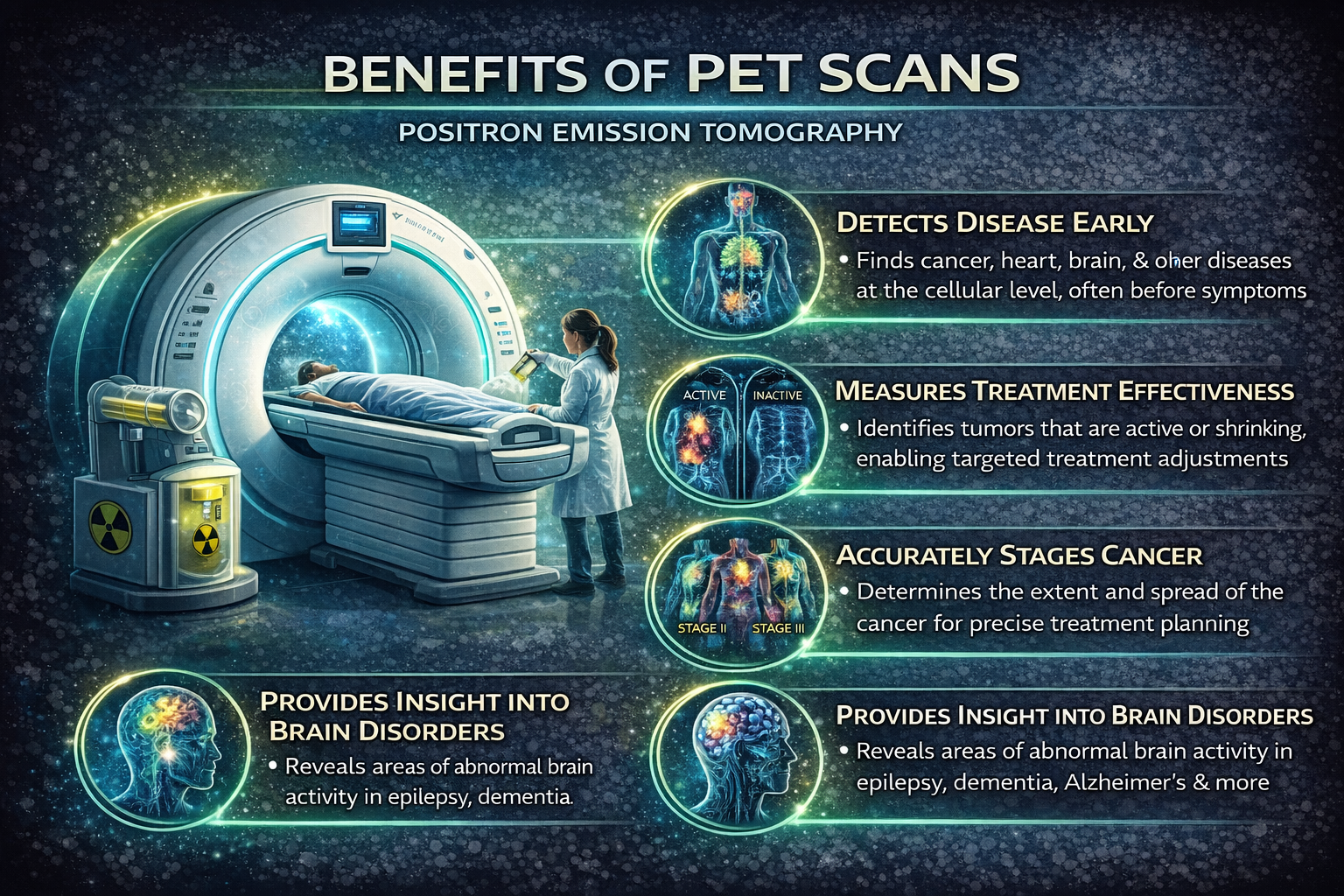
Positron Emission Tomography (PET) scans take functional imaging a step further. Rather than focusing on blood flow alone, PET imaging highlights cellular metabolism, showing where disease is biologically active. This is why PET scans are so valuable in oncology. They can reveal cancer before it causes obvious anatomical changes, determine whether tumors are responding to treatment, and identify spread that would otherwise go unnoticed. That information often changes the course of care.
PET imaging is also used in neurology, particularly for epilepsy and neurodegenerative diseases. It can reveal abnormal brain activity patterns long before structural imaging becomes abnormal. The shift here is subtle but important, PET scans don’t just show where something is, they show what it’s doing.

Radiation Therapy: One of the Most Effective Cancer Treatments Available
Radiation therapy has been a cornerstone of cancer treatment for decades, and for good reason, it works. By damaging the DNA of cancer cells, radiation therapy prevents tumors from growing and dividing. Modern techniques allow radiation to be delivered with remarkable precision, limiting exposure to surrounding healthy tissue while targeting disease directly.
Radiation therapy is often combined with surgery, chemotherapy, or immunotherapy. In many cancers, it improves survival and reduces recurrence. In others, it relieves pain, controls symptoms, and preserves quality of life when cure is not possible. Despite public perception, radiation therapy is not crude or experimental, it is one of the most carefully studied, continuously refined treatments in modern oncology.
Nuclear Cardiology Imaging: Improving Heart Care Without Unnecessary Risk
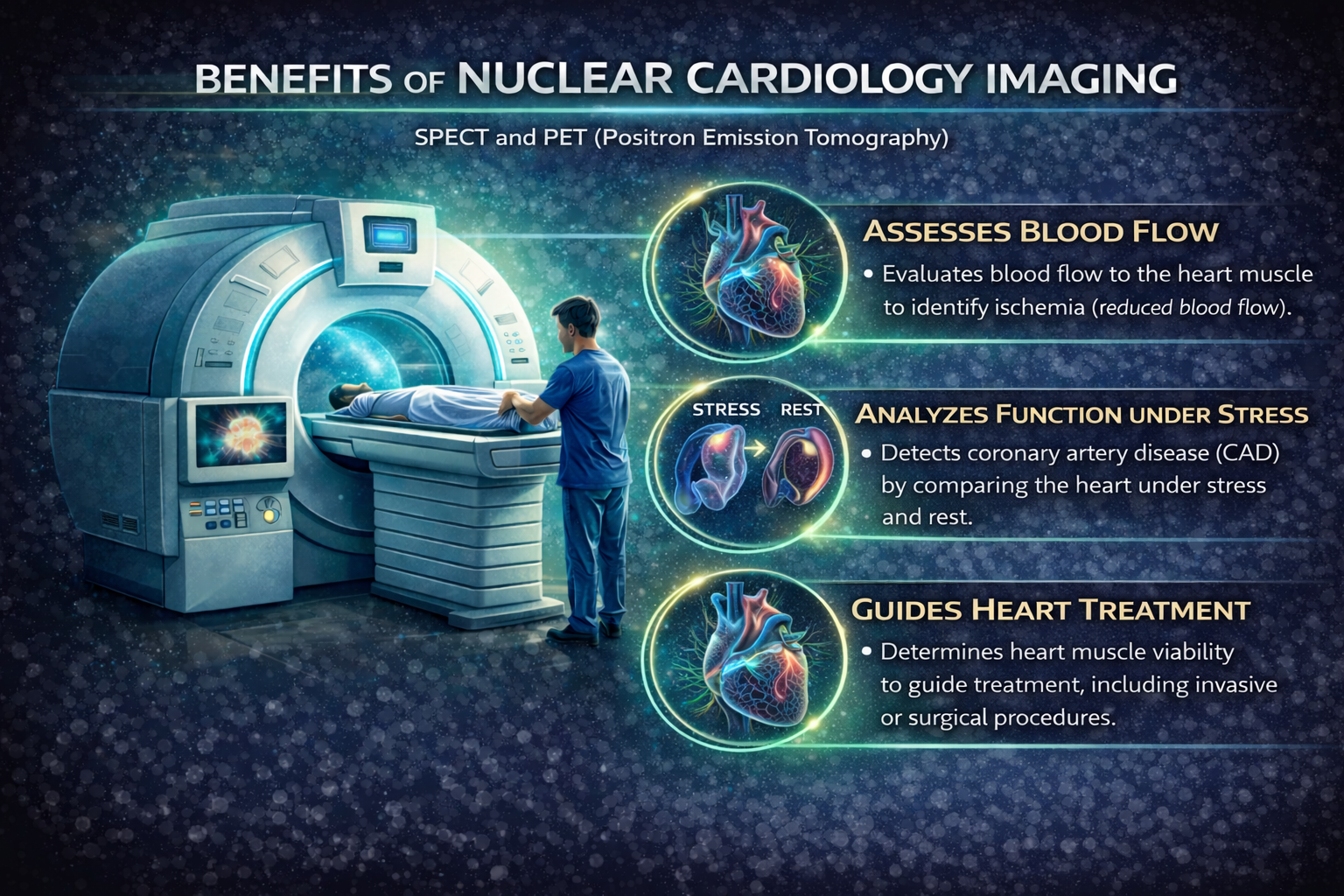
Nuclear cardiology imaging plays a quiet but critical role in diagnosing and managing heart disease. Using radioactive tracers, physicians can evaluate blood flow to the heart muscle under both rest and stress conditions. This makes it possible to identify blocked arteries, assess whether damaged heart tissue is still viable, and determine whether invasive procedures are likely to help. In many cases, nuclear cardiology prevents unnecessary catheterization while ensuring that high-risk patients are treated promptly. For a condition as common and serious as heart disease, this kind of targeted decision-making saves lives — and avoids harm.
Cardiac Radioablation (STAR): Treating Arrhythmias Without Surgery
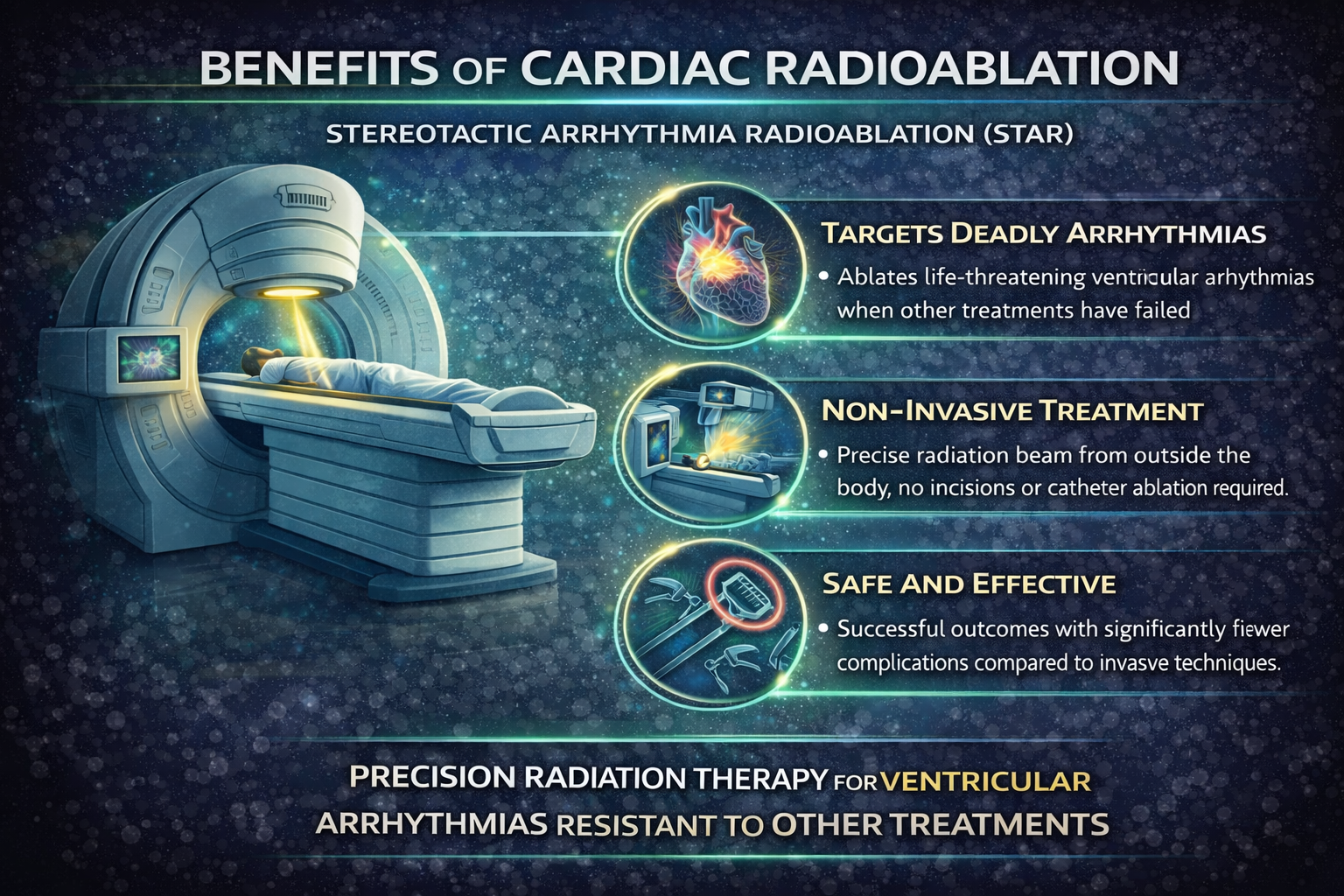
Stereotactic Arrhythmia Radioablation (STAR) represents one of the most innovative uses of radiation in medicine today. It is designed for patients with life-threatening ventricular arrhythmias who have exhausted conventional treatment options. Instead of catheters or surgery, STAR uses a precisely targeted radiation beam delivered from outside the body. The goal is to modify the heart tissue responsible for abnormal electrical signals, without incisions or prolonged recovery. For patients who have few alternatives, this approach can be life-saving. It also illustrates an important point: radiation technology is not static. It continues to evolve, opening doors that did not exist even a decade ago.
A Tool for Healing, Not Something to Fear
The benefits from medical radiation treatments are not hypothetical, they are measurable and save lives every day. From routine imaging to advanced cancer and cardiac treatment, radiation-based technologies have become essential to modern healthcare. Fear-based narratives often ignore this reality. When used responsibly, radiation is not a threat, it is one of the most effective tools medicine has for diagnosing disease, guiding treatment, and preserving life. That is radiation in service of humanity.