
Research Article Summary
• Primary focus:
This article investigates how low doses of ionizing radiation influence biological systems, with particular attention to mechanisms that may modulate cellular responses at doses below traditionally harmful levels. The authors review evidence suggesting that responses to low doses involve complex regulation rather than simple proportional damage.
• Adaptive and protective mechanisms:
The article highlights that biological systems have built-in adaptive processes, such as enhanced DNA repair activity, activation of antioxidant defenses, and stress-response signaling pathways. These mechanisms can help cells maintain homeostasis and mitigate damage at low radiation exposures.
• Non-linear dose–response behavior:
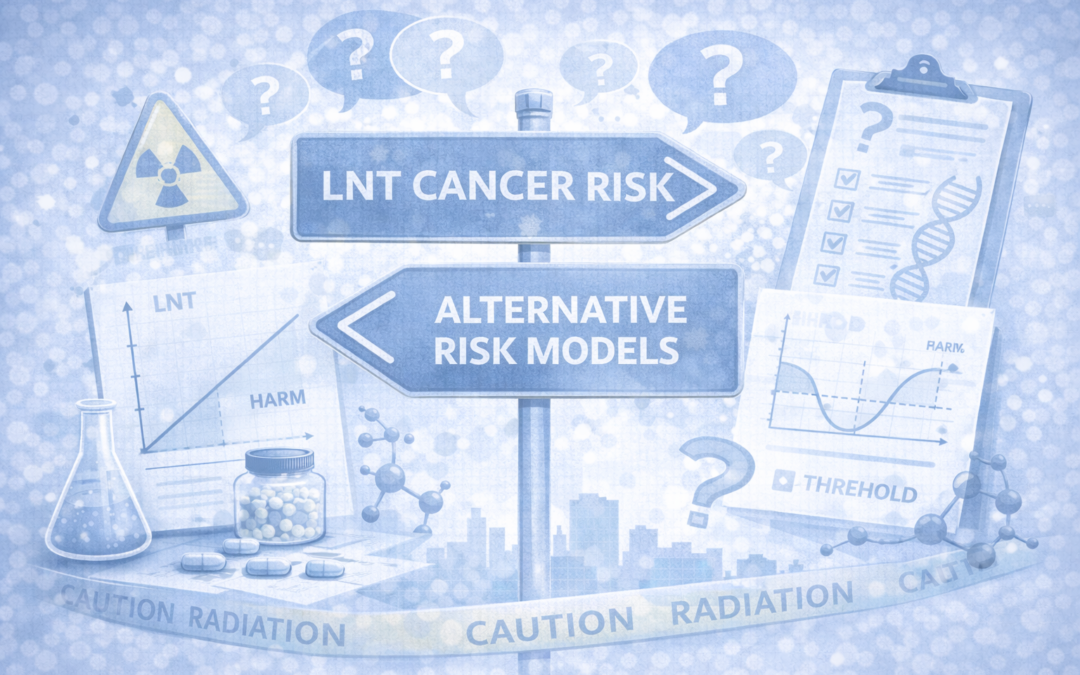
Evidence presented indicates that responses at low doses are often non-linear. Instead of mounting a direct increase in harm as dose rises, cells and organisms may show threshold effects or compensatory responses, where protective systems are upregulated to maintain function.
• Implications for risk models:
Because low doses engage complex cellular networks and adaptive mechanisms, the authors suggest that risk models based solely on linear extrapolation from high doses may not accurately reflect real biological outcomes. Incorporating mechanistic insight could lead to more nuanced risk assessments.
• Relevance for radiation protection:
Understanding adaptive responses and non-linear behavior may help refine how radiation exposure is managed in clinical, workplace, and environmental settings. A biologically grounded perspective supports science-based policy and clearer communication about low-dose radiation effects.
Please click here to read the full research article:
https://journals.sagepub.com/doi/10.1177/1559325816673491