
Research Article Summary
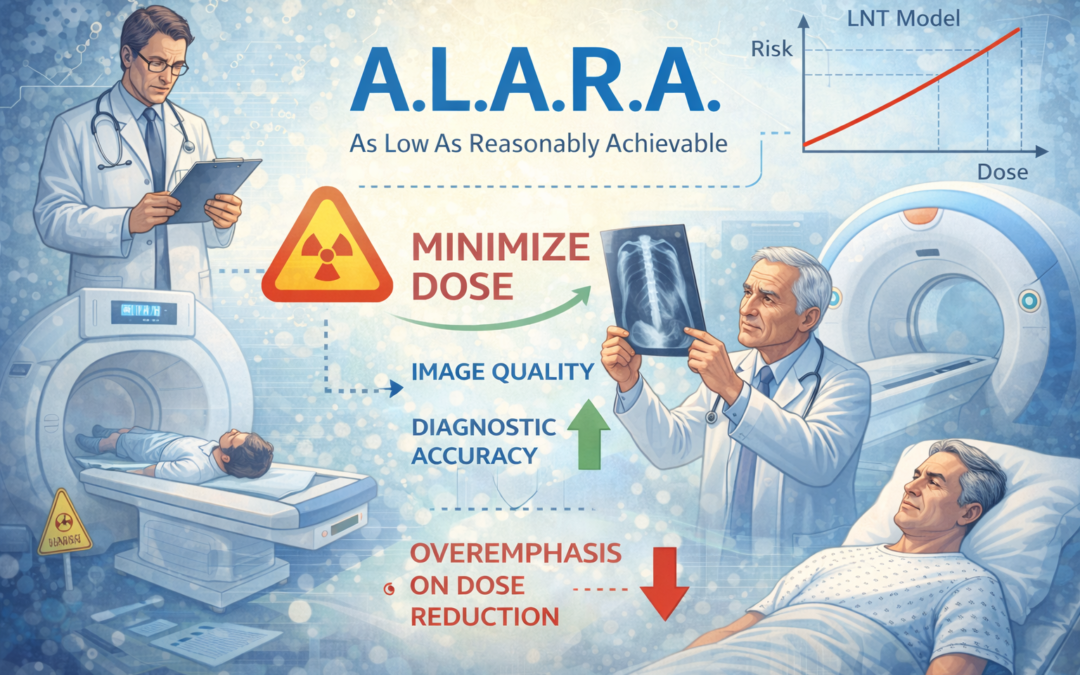
• Critique of ALARA: The article argues that the ALARA (As Low As Reasonably Achievable) principle — which aims to minimize radiation doses in medicine to the lowest possible level — has become counterproductive when applied without regard to actual biological risk and diagnostic/therapeutic benefit. Instead of improving patient care, it may now lead to degraded medical outcomes.
• Historical context: ALARA originated from early radiation protection policies heavily influenced by the Linear No-Threshold (LNT) model, which assumes any radiation exposure carries risk. The authors contend this assumption lacks solid scientific grounding, especially at low doses typical in medical settings.
• Medical practice implications: The authors claim that a rigid ALARA mindset in imaging and therapy can lead to overemphasis on dose reduction at the expense of image quality, diagnostic accuracy, or effective treatment planning — potentially resulting in misdiagnosis or suboptimal care.
• Calls for risk-benefit focus: Instead of strictly minimizing dose, the article advocates for a risk-benefit approach that considers the actual biological effects at low doses, clinical value of procedures, and patient outcomes — aligning radiation use with best medical practice rather than bureaucratic dose thresholds.
• Broader radiation science perspective: By questioning ALARA and its reliance on LNT, the article aligns with growing scientific discussions that low doses may not be as harmful as traditionally assumed, and in some cases may engage adaptive biological responses rather than cause measurable damage — suggesting a need for updated regulatory and clinical frameworks that reflect modern evidence.