
Research Article Summary
-
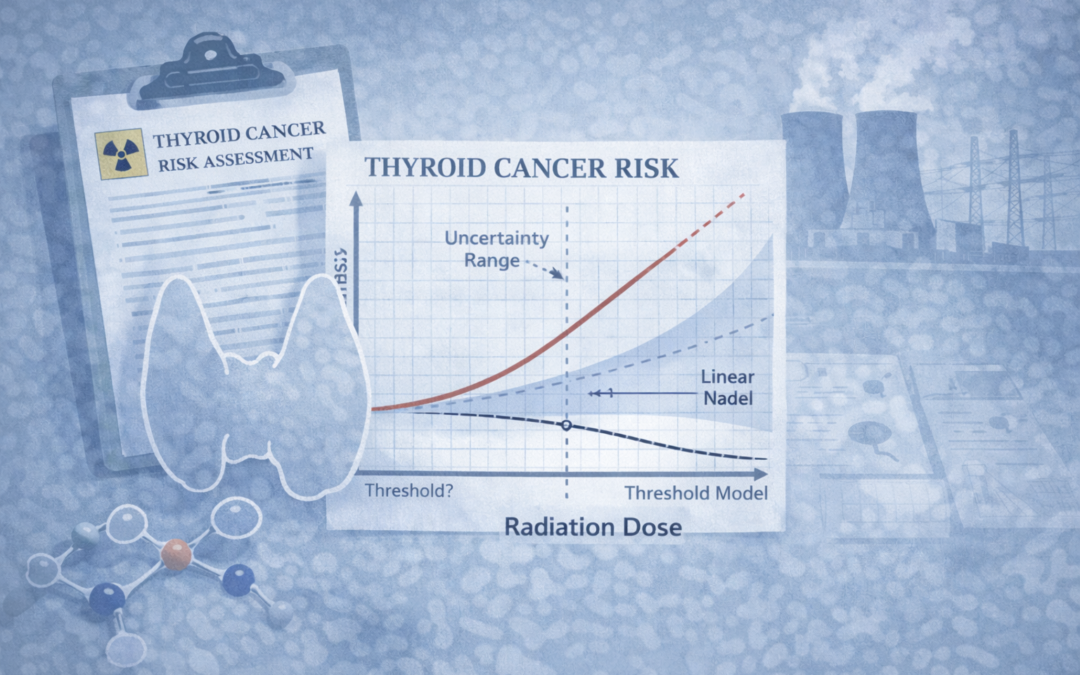
The article critically examines how cancer risk assessment for thyroid cancer in nuclear workers exposed after the Fukushima Daiichi accident has relied on the linear no-threshold (LNT) model, arguing that this framework may not be scientifically justified for low-dose exposures.
-
It highlights methodological limitations in applying LNT theory to thyroid cancer risk estimation, noting that empirical data from exposed worker populations do not consistently support a simple linear relationship between dose and cancer incidence.
-
The piece discusses biological factors specific to thyroid physiology and radiation response that complicate straightforward extrapolation from high-dose data to low-dose settings, suggesting alternative dose-response models may be more appropriate.
-
The article explores policy and regulatory implications, asserting that overreliance on LNT for occupational risk assessment could lead to overly conservative standards that do not reflect observed epidemiological patterns.
-
It concludes that a more nuanced approach to thyroid cancer risk in nuclear workers, grounded in data and mechanistic understanding rather than strict adherence to LNT assumptions, would better serve both public health and scientific integrity.