
Research Article Summary
-
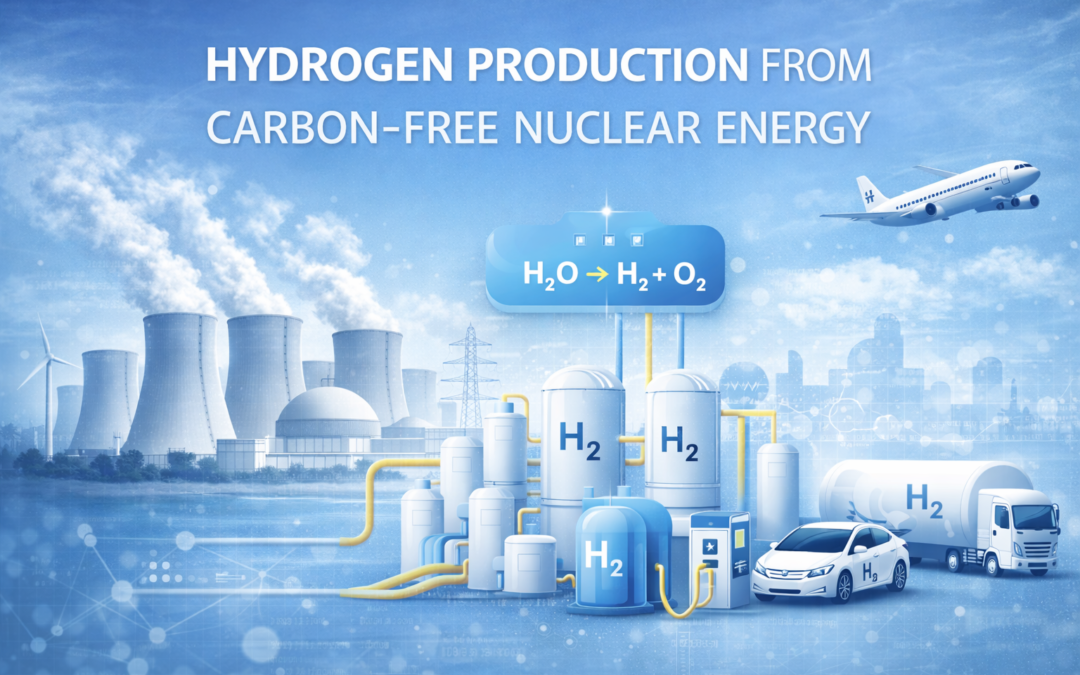
The report evaluates the role of nuclear energy in large-scale hydrogen production, emphasizing its potential to provide reliable, low-carbon hydrogen using existing and advanced nuclear reactor technologies.
-
It reviews multiple hydrogen production pathways, including high-temperature steam electrolysis and thermochemical cycles, highlighting how nuclear heat and electricity can improve efficiency compared to fossil-based methods.
-
The analysis discusses infrastructure, cost, and deployment considerations, noting that nuclear-powered hydrogen production could support decarbonization of industrial sectors that are difficult to electrify directly.
-
The report identifies technical, regulatory, and market challenges, including integration with the electrical grid, licensing frameworks, and the need for sustained investment in demonstration projects.
-
It concludes that nuclear-derived hydrogen represents a strategic opportunity for long-term clean energy systems, provided that policy alignment, technological maturation, and economic scalability are addressed.