
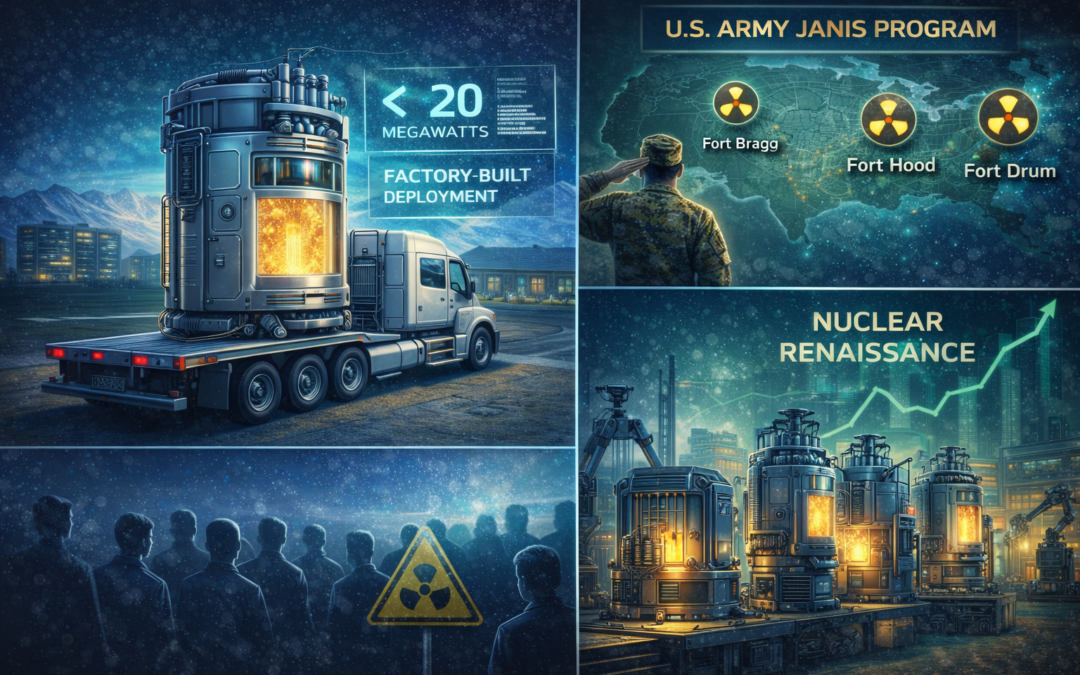
Overview of Nuclear Microreactors
-
Size and Power: These reactors are small enough to be transported by truck but powerful enough to generate up to 20 megawatts of electricity.
-
Applications: They are designed to power data centers, college campuses, small towns, or remote locations like Alaskan villages and mining sites.
-
Production: Unlike traditional plants, microreactors are factory-built for quick deployment rather than being constructed on-site over many years.
Military and Government Involvement
-
Project Pele/Janis Program: The U.S. Army has identified nine potential installations to host these power plants, including Fort Bragg, Fort Hood, and Fort Drum.
-
Security Benefits: Army leaders believe on-site nuclear power will protect bases from civilian grid failures, cyberattacks, or physical attacks on energy infrastructure.
-
Nuclear Renaissance: The administration is pushing for a variety of next-generation nuclear technologies, with plans to demonstrate approximately 10 different reactor designs within the next 24 months.
Challenges and Hurdles
-
Financial Investment: Companies require significant upfront capital to build the factories needed for mass production.
-
Market Readiness: Potential customers are waiting for the technology to be proven before placing orders.
-
Public Perception: After decades of mistrust regarding nuclear power, gaining community acceptance remains one of the largest obstacles to widespread adoption.