
Radiation in science and industry operates largely behind the scenes, yet its benefits are woven into everyday life. From space exploration and environmental protection to food safety, manufacturing, and infrastructure integrity, radiation technologies quietly safeguard society, advance human knowledge, and support global progress. These applications demonstrate that radiation, when responsibly applied, is not a threat to humanity—but an indispensable tool in its service.
Space Exploration and Deep-Space Power
Radiation science is essential to humanity’s ability to explore and understand the universe beyond Earth.
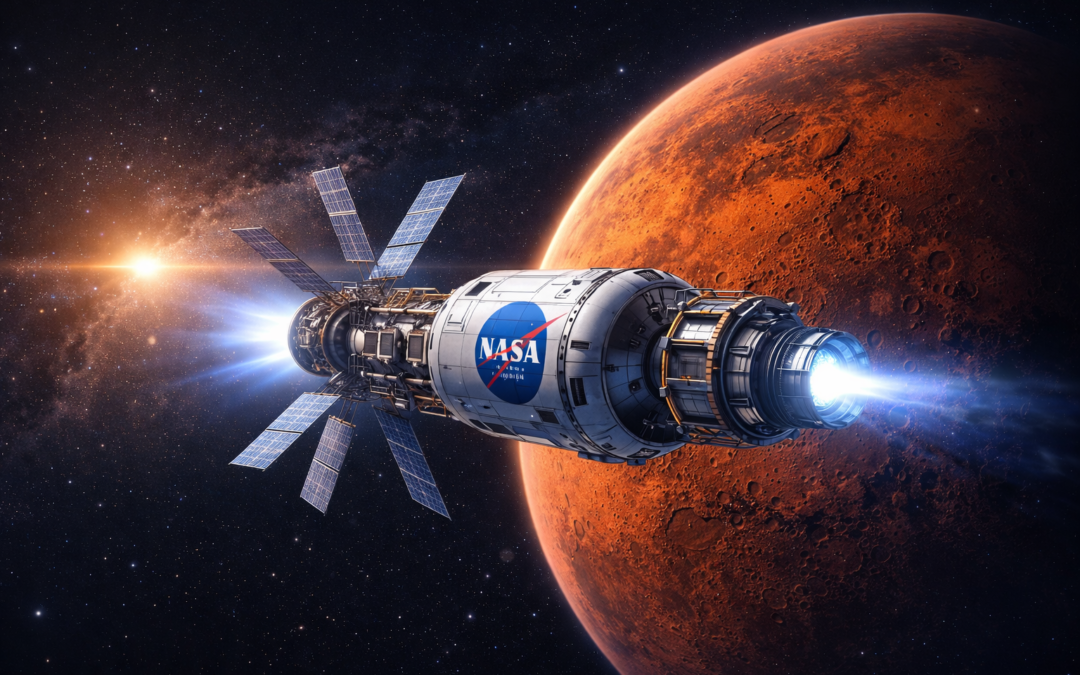
For missions that travel far from the Sun—where solar panels become ineffective—spacecraft rely on radioisotope power systems. These systems use the heat released from the natural radioactive decay of specific isotopes to generate reliable electricity over decades.
Radioisotope thermoelectric generators (RTGs) have safely powered some of humanity’s most ambitious missions, enabling exploration in environments where no other power source is viable.
They have been used to:
-
Power deep-space probes and planetary landers operating billions of miles from Earth
-
Support long-duration missions in extreme cold, darkness, and radiation environments
-
Enable scientific instruments to operate continuously for decades without refueling
-
Provide dependable energy for spacecraft systems, communications, and life-critical heaters
RTG-powered missions have expanded our understanding of the solar system and beyond, supporting landmark exploration efforts by organizations such as NASA at destinations including Mars, the Moon, Saturn, and the outer reaches of interstellar space.
Without radiation-based power systems, many of the discoveries that define modern planetary science would simply not exist.
Industrial Safety and Infrastructure Integrity
Radiation technologies protect lives by ensuring the safety and reliability of critical infrastructure.
-
Non-destructive testing (NDT) allows inspection of pipelines, aircraft components, bridges, and pressure vessels without damage
-
Industrial radiography detects cracks, corrosion, and hidden defects before catastrophic failures occur
-
Improves worker safety while reducing costly shutdowns and unnecessary replacements
Manufacturing and Advanced Materials
Radiation enables the precision manufacturing that modern society depends on.
-
Ion implantation is essential for semiconductor production, powering computers, smartphones, medical devices, and communications systems.
-
Radiation-based material processing enhances strength, durability, and heat resistance of polymers and composites.
-
Supports cleaner, more efficient manufacturing with fewer chemical byproducts.
Sterilization and Public Health Protection
Radiation protects public health far beyond hospitals and medical imaging.
-
Radiation sterilization safely eliminates bacteria and pathogens from medical equipment, pharmaceuticals, and packaging.
-
Used globally to ensure sterile syringes, implants, surgical tools, and laboratory supplies.
-
Reduces reliance on chemical sterilants, lowering toxic residues and environmental impact.
Food Safety and Global Food Security
Radiation contributes directly to safer food and reduced waste worldwide.
-
Food irradiation reduces harmful bacteria such as Salmonella and E. coli.
-
Extends shelf life, helping prevent spoilage and food loss.
-
Enables safer international food trade while preserving nutritional quality.
Environmental Monitoring and Protection
Radiation science plays a critical role in understanding and protecting the environment.
-
Radiotracers track pollutants in air, water, and soil.
-
Supports groundwater studies, climate research, and ecosystem monitoring.
-
Enables early detection of environmental hazards and contamination.
Research, Innovation, and Knowledge Advancement
Radiation tools drive breakthroughs across nearly every scientific discipline.
-
Used in physics, chemistry, biology, archaeology, and materials science.
-
Enables imaging, analysis, and measurement techniques unavailable by other means.
-
Continues to expand humanity’s understanding of nature and the universe.
Economic and Societal Benefits
Radiation-enabled industries support millions of jobs worldwide.
-
Strengthens high-technology manufacturing and industrial competitiveness.
-
Reduces costs through quality assurance, early defect detection, and improved efficiency.
-
Supports sustainable development while protecting workers, consumers, and the environment.