
Research Article Summary
• Primary focus:
This article examines how low-dose ionizing radiation affects biological systems, particularly through cellular and molecular mechanisms that may differ from responses seen with higher doses of exposure. The goal is to understand how cells respond at low levels that are relevant to environmental exposure, medical imaging, or occupational settings.
• Cellular stress and adaptive responses:
The authors review evidence showing that low doses of radiation can activate cellular stress response pathways, including DNA repair, antioxidant defenses, and signaling networks that regulate homeostasis. These responses can help mitigate damage and maintain the stability of biological systems.
• Non-linear dose–response behavior:
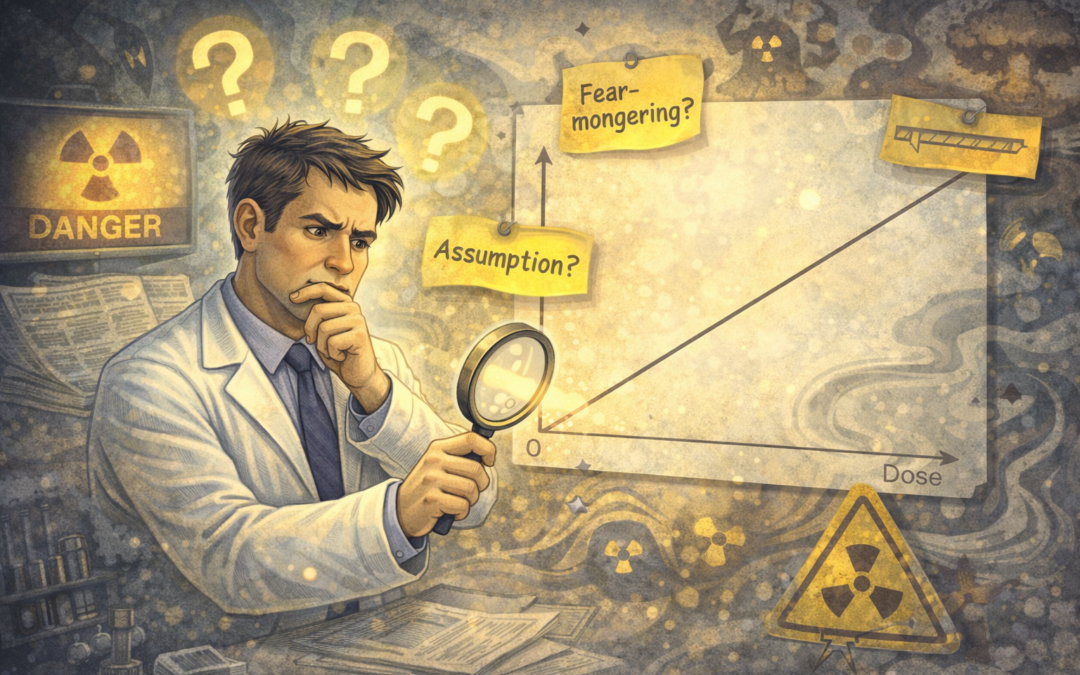
Rather than showing a simple proportional relationship between dose and harm, the article highlights that biological effects at low doses are often non-linear and context-dependent. Cells may exhibit threshold effects, adaptive regulation, or compensatory mechanisms that influence outcomes differently from what high-dose extrapolation would predict.
• Implications for risk modeling:
Because low-dose exposures engage dynamic biological processes rather than just accumulating damage, the article suggests that traditional risk models — especially those assuming a direct linear relationship with dose — may oversimplify reality and potentially overestimate risk at low levels.
• Relevance for public health and policy:
The authors emphasize that understanding the complex biology of low-dose radiation can inform more nuanced risk communication and regulatory frameworks, improving how public health decisions are made regarding exposure limits and protective standards.
https://journals.sagepub.com/doi/10.1177/1559325817735478 ← original research article