
Research Article Summary
-
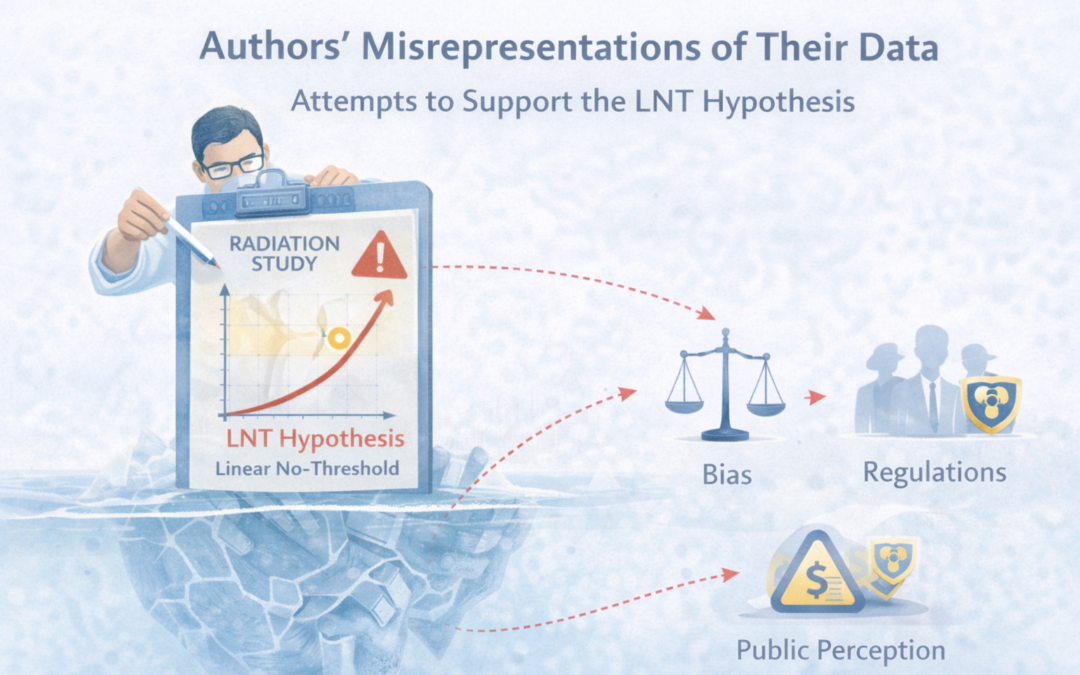
The article analyzes instances where authors of scientific studies are alleged to have misinterpreted or misrepresented their own data in support of the Linear No-Threshold (LNT) hypothesis for radiation risk.
-
It reviews specific examples from published literature where methodology choices, data selection, or statistical interpretations may have biased results toward finding risk at low-dose exposure levels, even when the data did not unambiguously support such conclusions.
-
The review highlights how confirmation bias and adherence to LNT assumptions can influence research framing, leading some studies to overstate the significance of associations between low-dose radiation and adverse health outcomes.
-
It examines broader implications for the scientific community, discussing how such misrepresentations can propagate through policy, regulation, and public perception, reinforcing radiophobia and conservative risk limits.
-
The article concludes by advocating for greater transparency, rigorous data interpretation, and acknowledgment of biological mechanisms that may contradict simple linear extrapolation, encouraging science that more accurately reflects empirical evidence.