
by admin | Dec 3, 2020 | Featured Articles, Hormesis, LNT Hypothesis
5 key point summary of the text: Evidence for radiation hormesis (benefits of low-dose radiation) was not refuted in a recent online debate, undermining the LNT model. The LNT model, which assumes all radiation is harmful, remains unproven and may itself increase...

by admin | Sep 3, 2020 | LNT Hypothesis
Research Article Summary The article reviews existing epidemiological evidence concerning the applicability of the Linear No-Threshold (LNT) model in radiological protection, focusing on how well human studies support its use for cancer risk assessment. ScienceDirect...
by admin | Sep 2, 2020 | Fear, Uncertainty and Doubt, LNT Hypothesis
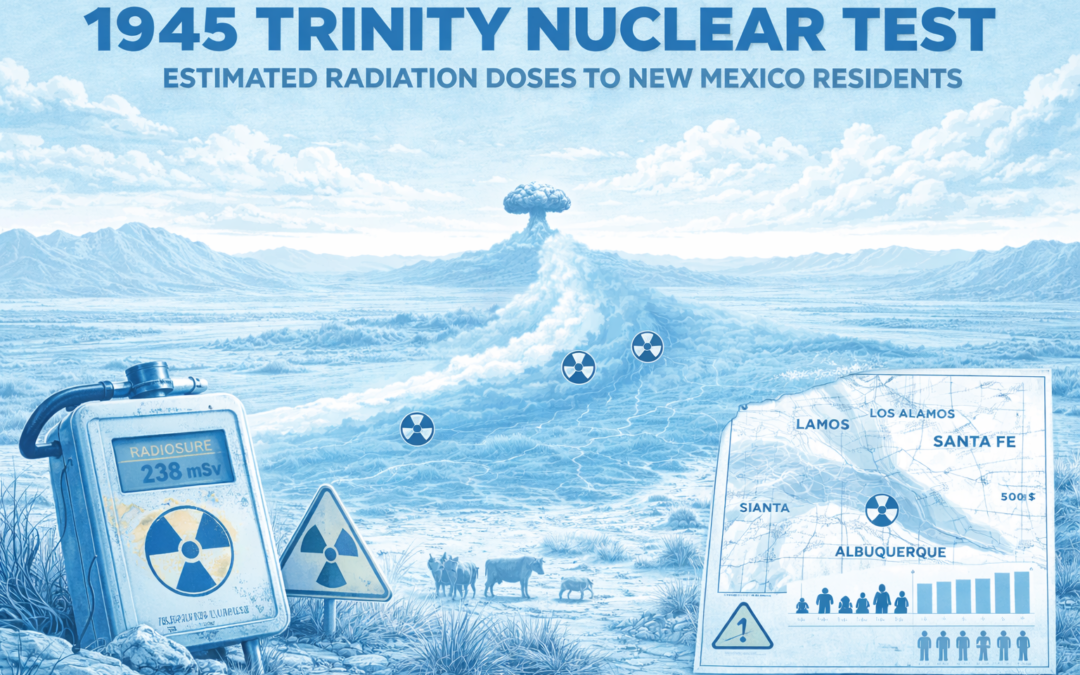
Research Article Summary The article discusses reconstructed estimates of radiation doses received by residents of New Mexico as a result of exposure to fallout from the 1945 Trinity nuclear test, with a focus on geographic variability and long-term exposure...
by admin | Sep 2, 2020 | LNT Hypothesis, Radiophobia
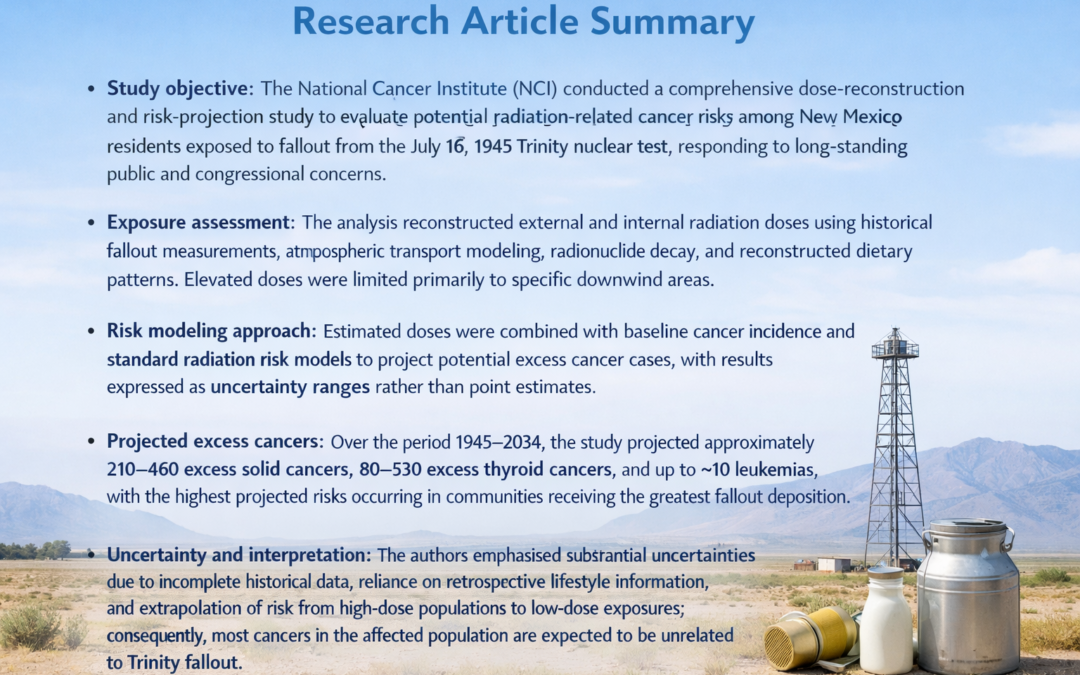
Research Article Summary • Study objective: The National Cancer Institute (NCI) conducted a comprehensive dose-reconstruction and risk-projection study to evaluate potential radiation-related cancer risks among New Mexico residents exposed to fallout from the July 16,...
by admin | Aug 29, 2020 | Featured Articles, Hormesis, LNT Hypothesis
Research Article Summary • Study focus: Waltar & Feinendegen examine how low-dose radiation responses are best understood by introducing the concept of two biological thresholds in the dose-response relationship, challenging simplistic models that assume effects...
by admin | Jul 23, 2020 | Featured Articles, Hormesis, LNT Hypothesis, Radiophobia
Joint Communique of SARI, XLNT, and SRI Regarding the Health Effects of … Recommendation: Substantial scientific evidence supports these statements. If the public, professionals, advisory bodies, governments, and the media understand and act on the above information,...
