
Research Article Summary
-
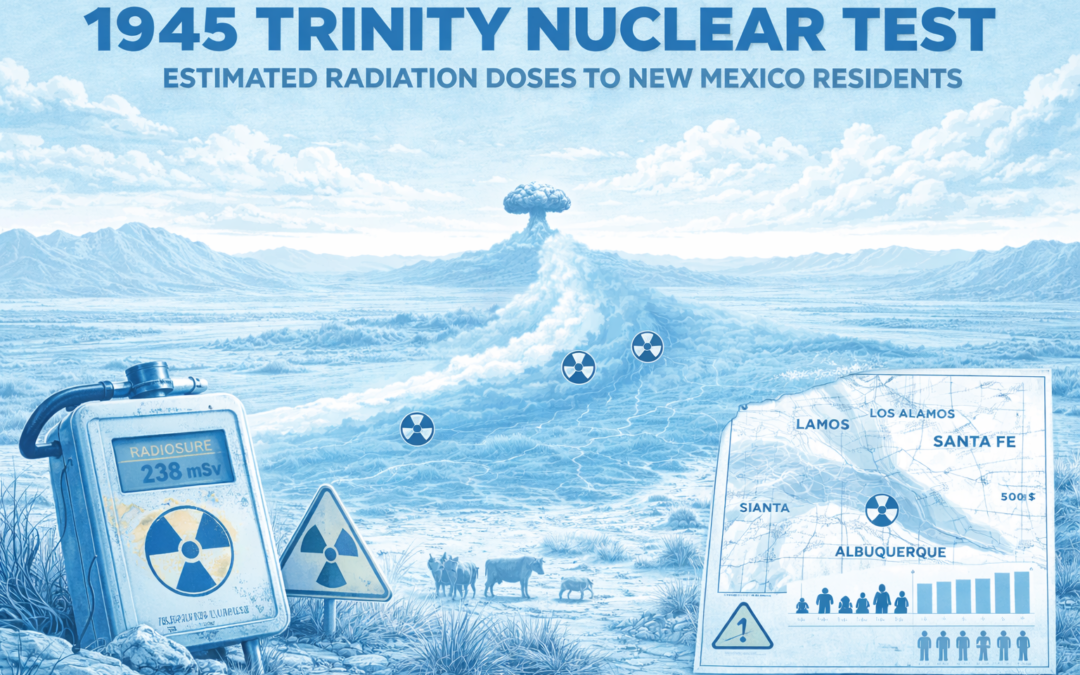
The article discusses reconstructed estimates of radiation doses received by residents of New Mexico as a result of exposure to fallout from the 1945 Trinity nuclear test, with a focus on geographic variability and long-term exposure scenarios.
-
It outlines the methodologies used to estimate external and internal radiation doses, integrating historical fallout deposition data with models of human exposure pathways, including inhalation and ingestion of contaminated soil and vegetation.
-
The review highlights estimated dose ranges for different populations based on location, age, and lifestyle factors, indicating that highest estimated doses were generally associated with communities closer to downwind fallout plumes.
-
The article emphasizes the uncertainties inherent in retrospective dose reconstruction, such as incomplete historical monitoring data, variability in individual behavior and diet, and assumptions in environmental transport models.
-
It concludes that while many residents likely received low to moderate doses, the estimated doses are highly variable and uncertain, underscoring the need to interpret associated health risk projections with caution.