by admin | Sep 2, 2020 | Fear, Uncertainty and Doubt, Featured Articles
Research Article Summary The study projects the lifetime number of radiation-related excess cancer cases among 581,489 residents of New Mexico exposed to radioactive fallout from the 1945 Trinity nuclear test, using reconstructed tissue-specific radiation doses...
by admin | Sep 2, 2020 | Fear, Uncertainty and Doubt, LNT Hypothesis
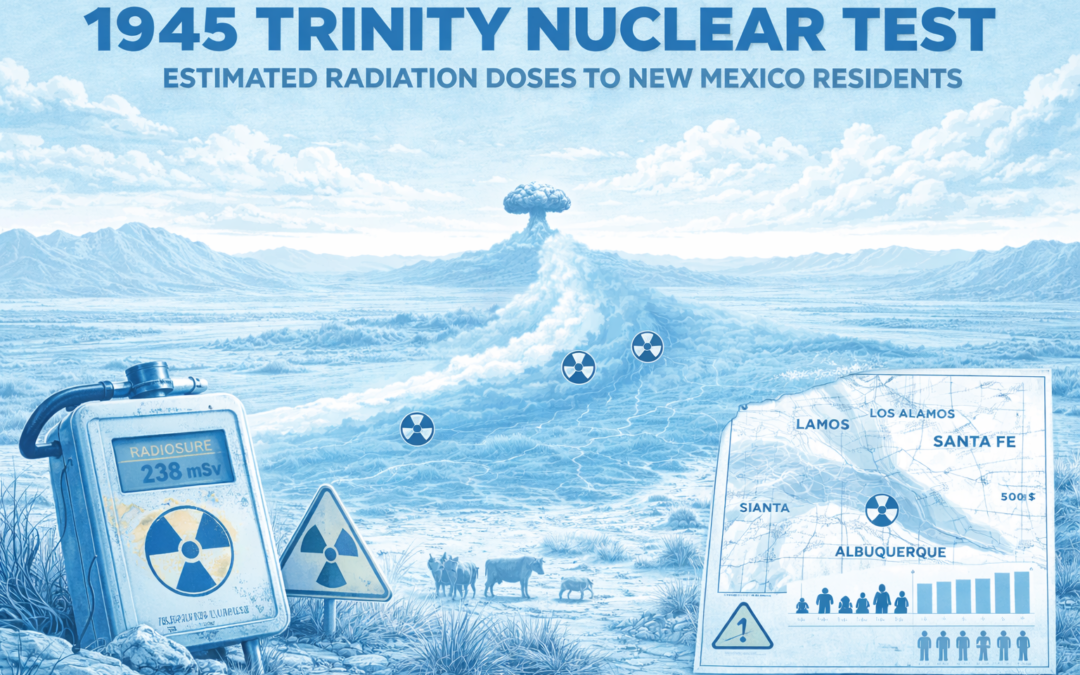
Research Article Summary The article discusses reconstructed estimates of radiation doses received by residents of New Mexico as a result of exposure to fallout from the 1945 Trinity nuclear test, with a focus on geographic variability and long-term exposure...
by admin | Sep 2, 2020 | LNT Hypothesis, Radiophobia
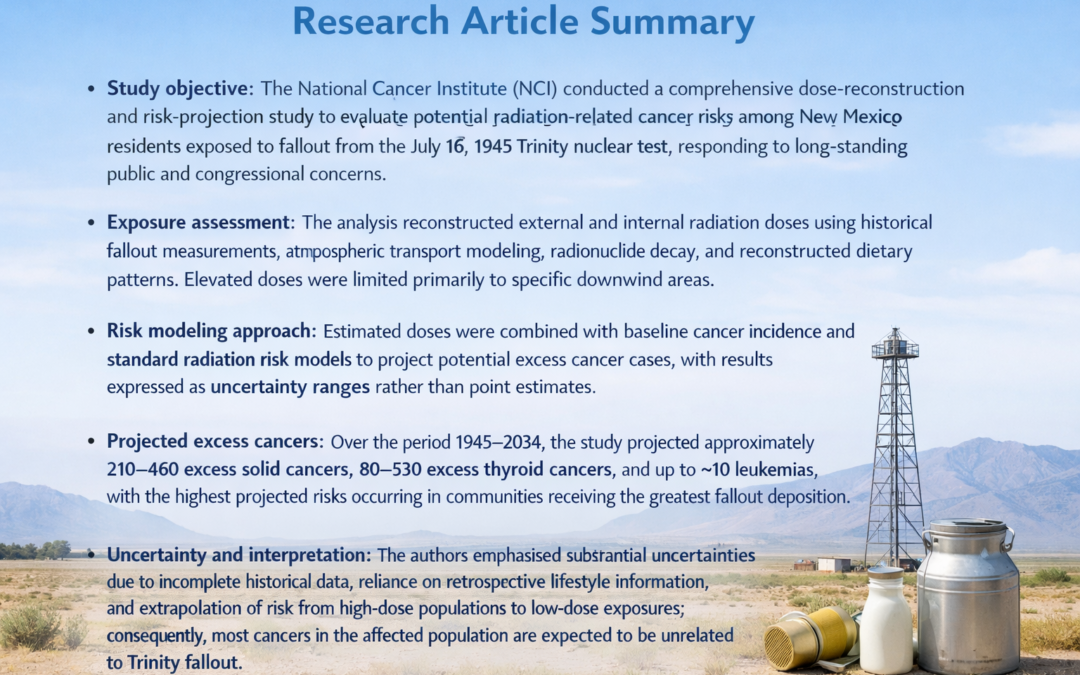
Research Article Summary • Study objective: The National Cancer Institute (NCI) conducted a comprehensive dose-reconstruction and risk-projection study to evaluate potential radiation-related cancer risks among New Mexico residents exposed to fallout from the July 16,...
by admin | Aug 29, 2020 | Featured Articles, Hormesis, LNT Hypothesis
Research Article Summary • Study focus: Waltar & Feinendegen examine how low-dose radiation responses are best understood by introducing the concept of two biological thresholds in the dose-response relationship, challenging simplistic models that assume effects...
by admin | Jul 23, 2020 | Featured Articles, Hormesis, LNT Hypothesis, Radiophobia
Joint Communique of SARI, XLNT, and SRI Regarding the Health Effects of … Recommendation: Substantial scientific evidence supports these statements. If the public, professionals, advisory bodies, governments, and the media understand and act on the above information,...

by admin | Jun 26, 2020 | Hormesis, Nuclear Medicine
Research Article Summary • Treatment context: The article reports on the idea of using low-dose lung radiotherapy (LDRT) as a potential treatment for COVID-19 pneumonia, based on historical evidence that low doses of X-rays reduced inflammation and were used for...
