
Research Article Summary
-
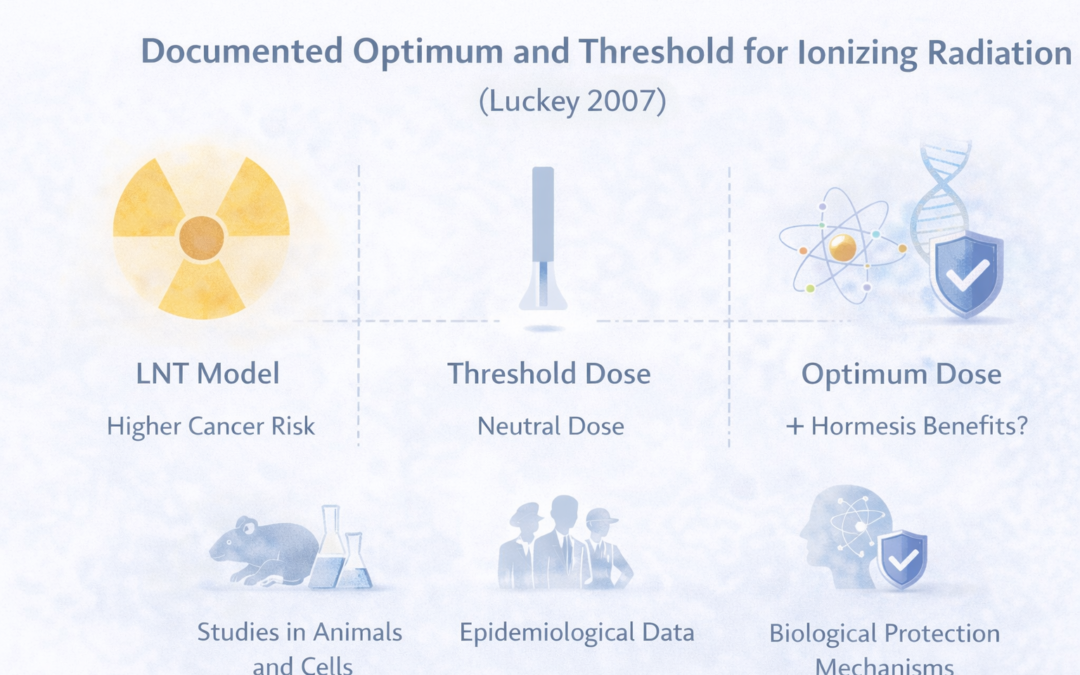
The article reviews Luckey’s 2007 paper, which examines experimental evidence for optimum and threshold dose–response relationships in ionizing radiation exposure beyond the traditional Linear No-Threshold (LNT) framework.
-
It highlights historical and biological data suggesting that low doses of ionizing radiation can have neutral or beneficial effects on organisms, consistent with the concept of radiation hormesis and threshold models, rather than a strictly linear increase in cancer risk with dose.
-
The review summarizes findings from animal studies and cellular experiments indicating that low-dose exposure may activate protective biological mechanisms, such as enhanced DNA repair and immune surveillance.
-
Epidemiological observations from various exposed populations are discussed, emphasizing that detection of adverse effects at low dose levels is inconsistent, and that some cohorts show outcomes not predicted by LNT-based risk projections.
-
Luckey’s work calls for a re-evaluation of radiation risk assessment frameworks, proposing that threshold and optimum dose concepts better align with empirical evidence and biological understanding than the traditional unmodified LNT model.