
Research Article Summary
-
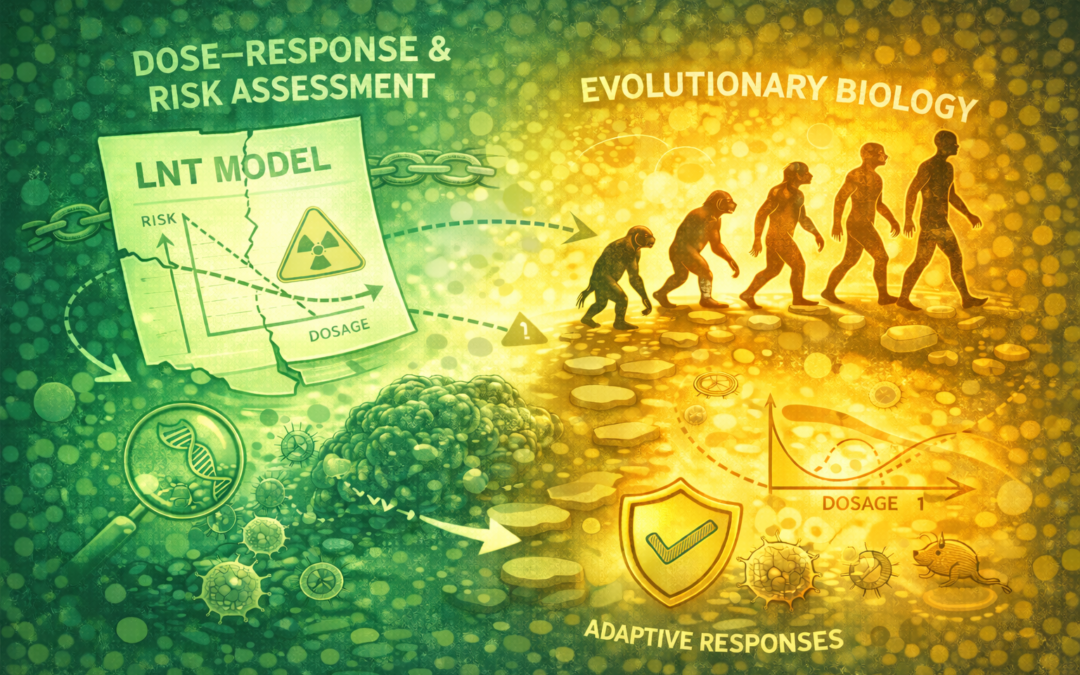
The article explores how evolutionary biology principles can inform and potentially reshape dose–response models used in risk assessment, arguing that many standard approaches (such as linear no-threshold) do not align with how biological systems have evolved to respond to environmental stressors.
-
It highlights that organisms possess robust adaptive mechanisms — including DNA repair, cellular signaling pathways, and stress response networks — honed through natural selection, which suggest that low-dose exposures may trigger beneficial or protective responses rather than simple proportional harm.
-
The piece emphasizes the need to integrate evolutionary and mechanistic insights into toxicology and risk science, suggesting that dose–response models should account for selective pressures that favor resilience, repair, and regulatory feedback at low doses.
-
It critically examines how historical dose–response paradigms emerged, often without sufficient consideration of biological complexity, and presents an evolutionary framework that accommodates non-linearity, thresholds, and adaptive responses as normative rather than exceptional.
-
The article concludes that grounding risk assessment models in evolutionary biology can lead to more biologically realistic predictions of health outcomes, improve understanding of low-dose effects across diverse taxa, and better support evidence-based policy decisions.