
Research Article Summary
-
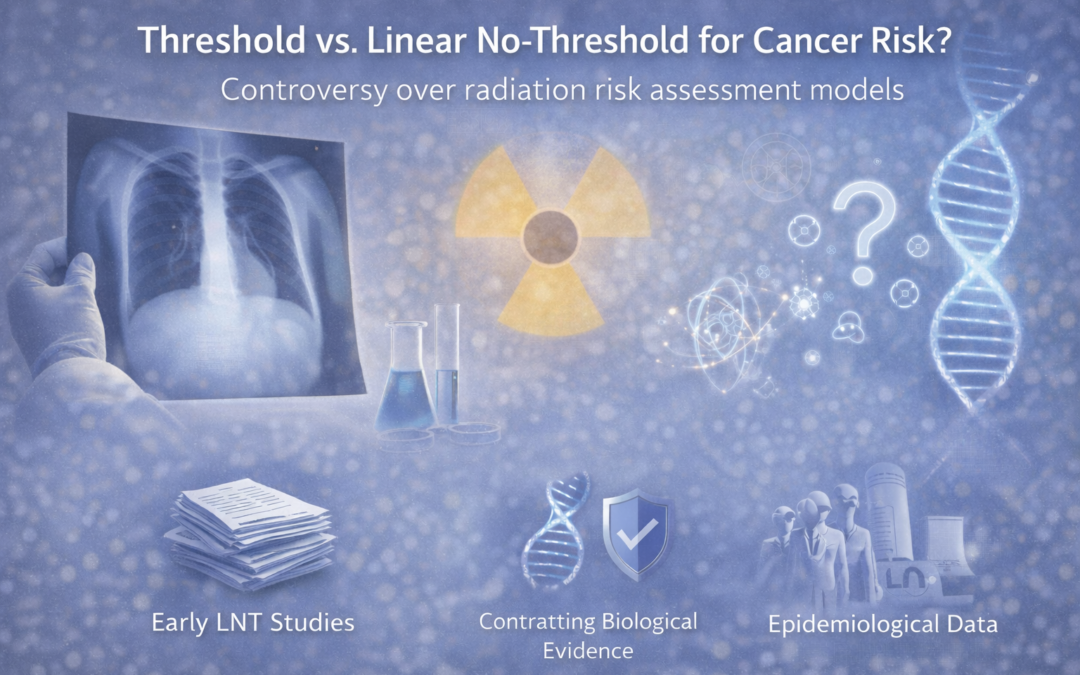
The article reviews historical and contemporary studies that have shaped the debate between threshold dose–response models and the linear no-threshold (LNT) model for assessing cancer risk from ionizing radiation.
-
It highlights that several early pivotal studies used to justify the universal adoption of the LNT model had methodological limitations, including small sample sizes, confounding factors, and reliance on extrapolation from high doses.
-
The review examines contrasting biological evidence, such as DNA repair mechanisms, adaptive responses, and hormesis phenomena, which suggest that low-dose radiation may not increase cancer risk linearly and may even have neutral or beneficial effects.
-
Epidemiological data from various exposed populations — including nuclear workers, medical imaging cohorts, and environmental exposure groups — are discussed, demonstrating inconsistency with strict linear extrapolation at low doses.
-
The article concludes that the ongoing adherence to the LNT model in international radiation protection policy remains controversial and that a re-evaluation incorporating biological mechanisms and threshold concepts could improve scientific accuracy in risk assessment.