
Research Article Summary
-
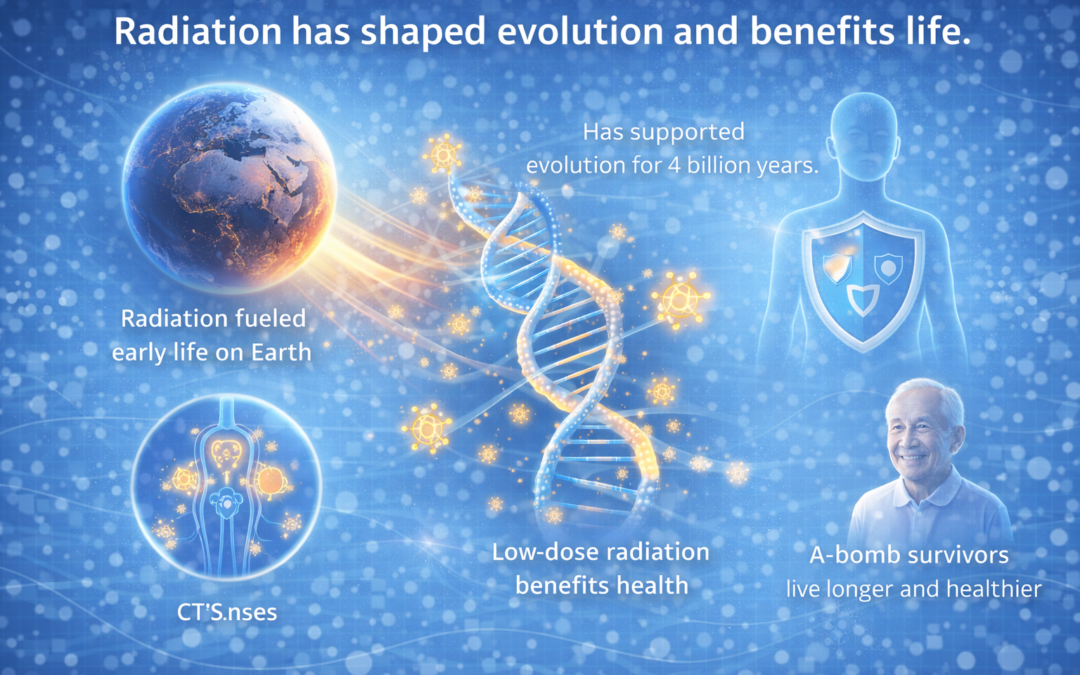
The article reviews evidence showing that life emerged and evolved under conditions of substantially higher natural background radiation than exist today, indicating that biological systems have long adapted to radiation exposure.
-
It examines experimental and observational data demonstrating that low-dose radiation (LDR) can activate protective biological mechanisms, including DNA repair, immune modulation, and redox signaling, consistent with the concept of radiation hormesis.
-
The review highlights findings that many microorganisms use radiation-induced chemical processes as an energy source, and that radiation-derived reactive oxygen species function as essential cellular signaling molecules rather than purely damaging agents.
-
Epidemiological analyses of Japanese atomic-bomb survivors are discussed, noting that at low and moderate doses, survivors exhibit longer average lifespans and lower cancer incidence than comparison populations, contradicting linear extrapolation models.
-
The authors conclude that the linear no-threshold (LNT) model is inconsistent with biological, evolutionary, and epidemiological evidence, and that its continued use limits beneficial medical and public-health applications of low-dose radiation.