
Research Article Summary (5 Bullet Points)
-
Newly uncovered correspondence indicates that Hermann J. Muller was aware by 1933 that he was a strong candidate for the Nobel Prize, shaping his scientific and professional incentives during a critical period in radiation genetics.
-
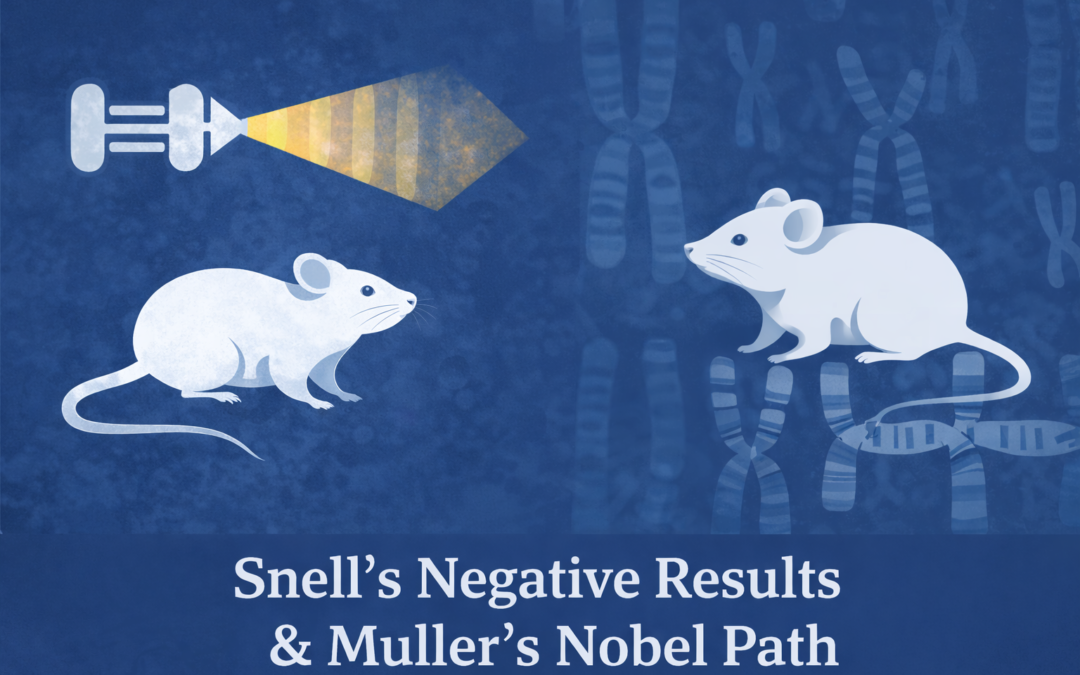
Under Muller’s supervision, George Snell conducted extensive mouse mutation experiments that failed to confirm radiation-induced gene mutations analogous to Muller’s fruit fly results.
-
Despite their significance, Snell’s negative mouse findings were not cited or promoted by Muller, effectively removing contradictory evidence from the emerging radiation-mutation narrative.
-
The omission of these results helped reinforce Muller’s claims of universal radiation-induced mutagenesis and contributed to the early scientific acceptance of linear dose-response assumptions.
-
This historical case illustrates how selective citation and career incentives can influence the scientific record, with lasting consequences for radiation risk assessment and regulatory policy.