
Research Article Summary
-
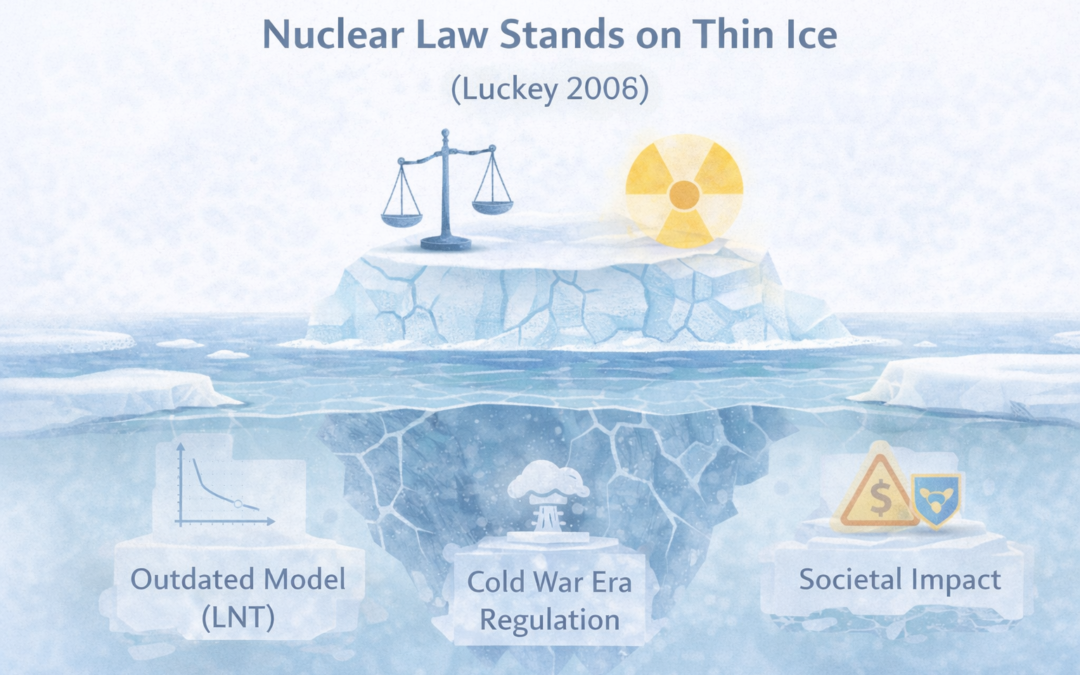
The article reviews Luckey’s 2008 analysis of international nuclear law and radiation protection standards, arguing that many regulatory frameworks are based on outdated assumptions about low-dose radiation risk.
-
It discusses how the Linear No-Threshold (LNT) model, which underpins much of contemporary radiation regulation, has influenced legal standards, policy decisions, and public health directives despite scientific debate over its applicability at low doses.
-
The review highlights historical context regarding the development of nuclear regulatory law, noting that some early legal norms were shaped during the Cold War era and may no longer reflect current radiobiological evidence.
-
It examines ethical and practical implications of strict radiation limits, suggesting that overly conservative laws based on unverified risk assumptions can lead to unintended consequences, including economic cost and public fear.
-
The article concludes that re-evaluating regulatory approaches — aligning them more closely with contemporary scientific understanding of radiation hormesis and threshold effects — could improve both public policy and societal outcomes.