
Research Article Summary
-
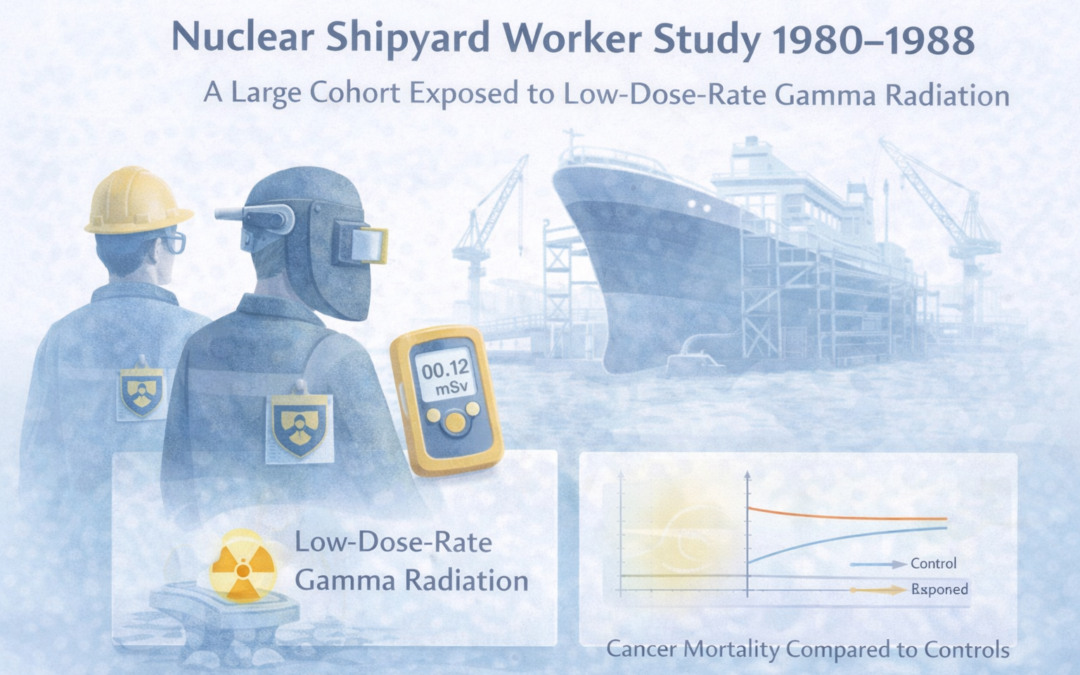
The article reviews the Nuclear Shipyard Worker Study (NSWS), a major occupational epidemiology project examining health outcomes in a large cohort of U.S. workers exposed to low-dose-rate gamma radiation during shipyard maintenance and construction activities between 1980 and 1988.
-
It describes how the study compared radiation-exposed workers’ mortality and cancer incidence with those of a control population with similar socioeconomic and occupational characteristics but minimal radiation exposure.
-
The analysis highlights findings that the cohort exposed to low-dose-rate gamma radiation did not show a statistically significant increase in overall cancer mortality compared to controls, challenging simple extrapolations of the Linear No-Threshold (LNT) model at low dose rates.
-
The review also discusses methodological strengths and limitations of the study, including comprehensive dose reconstruction, long follow-up periods, potential confounders, and the healthy worker effect, which can influence risk estimates in occupational studies.
-
The article concludes that data from large occupational cohorts like the NSWS provide valuable empirical evidence that can inform radiation risk assessment policies, particularly at low dose rates relevant to occupational and environmental exposures.