
Research Article Summary
• Primary focus:
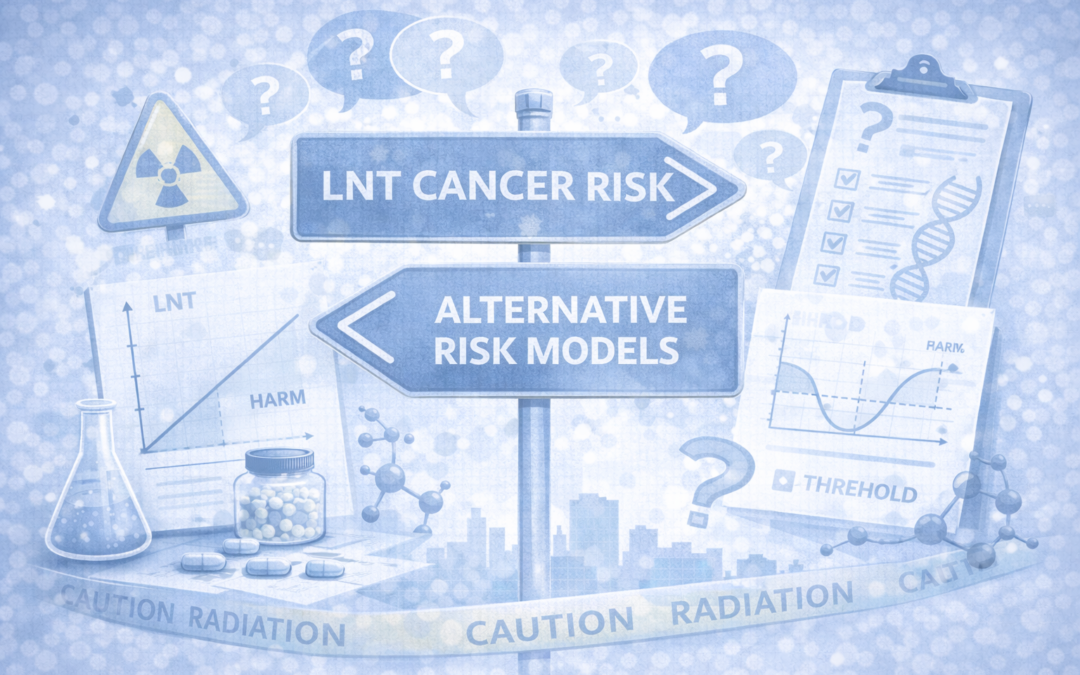
This article critically examines the Linear No-Threshold (LNT) model — the idea that cancer risk increases proportionally with any increase in ionizing radiation dose — and outlines scientific and conceptual challenges with applying LNT for radiation protection and regulatory policy.
• Scientific limitations of LNT:
The authors argue that the LNT model is not grounded in robust biological evidence at low doses, and that it fails to account for cellular defense mechanisms such as DNA repair, antioxidant responses, apoptosis, and immune system interactions. Such mechanisms influence how organisms respond to low-level exposures in non-linear ways that LNT does not capture.
• Empirical and experimental inconsistencies:
The paper highlights studies where low doses of radiation did not produce proportional increases in mutations, cancer markers, or adverse biological outcomes, and in some cases elicited adaptive responses that improved cellular resilience. These findings contrast with LNT’s assumption of uniform proportional risk.
• Risk assessment and policy impacts:
Because LNT assumes every increment of radiation is harmful, the authors contend that regulatory frameworks based on LNT may overestimate risk at low doses, leading to unnecessary restrictions, public fear, and misallocation of resources. They suggest that alternative models reflecting biological complexity would better inform policy.
• Calls for updated frameworks:
The article concludes by recommending that radiation protection standards and health communication be updated to incorporate modern understanding of radiobiology, rather than relying solely on extrapolation from high-dose exposures. Doing so could enhance scientific accuracy and public trust.
Please click here to read the full research article:
https://www.researchgate.net/publication/309374680_Problems_with_the_Linear_No-Threshold_Model_and_Reasons_Why_It_Should_Not_be_Used_for_Radiation_Protection ←