
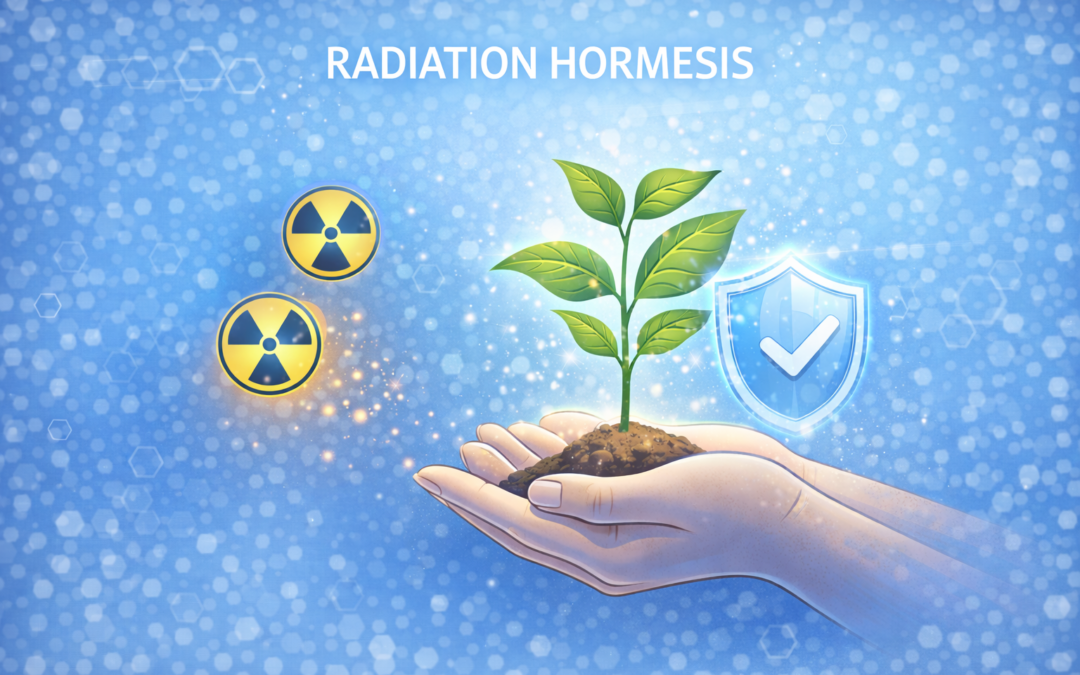
Research Article Summary
• Central theme:
This article discusses radiation hormesis, the hypothesis that low doses of ionizing radiation can produce beneficial biological effects rather than simply causing harm. The piece reviews historical and experimental evidence suggesting that low levels of radiation may stimulate protective responses in cells and organisms.
• Biological mechanisms:
The concept of hormesis centers on the idea that low-dose radiation activates adaptive stress response pathways. These include enhanced DNA repair, antioxidant defenses, immune modulation, and cellular maintenance systems that together can improve resistance to damage.
• Historical context:
The article reviews how the idea of beneficial low-dose effects appeared in early radiobiology research and how it was sidelined by the widespread adoption of the Linear No-Threshold (LNT) model. It suggests that hormetic effects were observed in a variety of biological systems, even though they have been controversial in mainstream radiation protection.
• Evidence and interpretations:
Examples cited include experiments where low exposures reduced mutation rates or improved survival compared with unexposed controls, as well as epidemiological observations where populations with slightly elevated background radiation did not show increased disease risk. These data are presented as evidence that under some conditions low doses can trigger resilience and repair rather than damage accumulation.
• Implications:
If hormetic responses are real and reproducible, this could have important implications for radiation risk assessment, medical uses of radiation, and public understanding, suggesting that low levels of exposure might not only be harmless but potentially beneficial in certain biological contexts.