-
Research Article Summary
• Central focus:
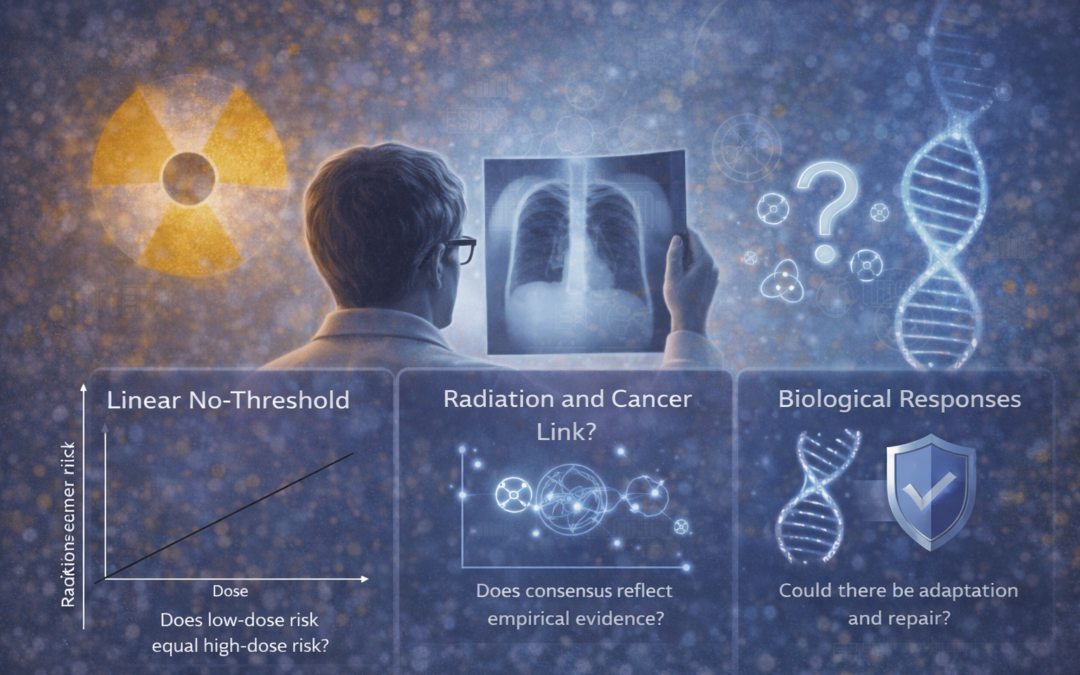
This article explores how radiation dose rate—not just total dose—affects biological response and challenges assumptions of the Linear No-Threshold (LNT) hypothesis, which ignores dose rate in driving risk estimates.• Dose rate matters:
The author explains that the rate at which radiation is delivered significantly influences cellular and molecular responses. The body’s natural repair mechanisms, such as DNA repair and apoptosis of damaged cells, are more active when dose is spread out over time, meaning the same total radiation can have very different effects depending on how quickly it is received.• Evidence across biological levels:
Data from molecular studies, animal experiments, and human observations all show that low dose rates produce different outcomes than high dose rates. At high rates, damage may overwhelm repair, but at low rates, adaptive and protective processes can mitigate or reverse damage.• Relevance to cancer risk models:
Because dose rate influences biological effects, the article argues that assuming a single linear risk relationship from zero upwards (as in LNT) is incomplete or misleading. The more nuanced biology suggests thresholds and dose-rate dependencies that the LNT model does not capture.• Implication for regulation and interpretation:
The author suggests that understanding dose rate effects is critical for estimating cancer risk accurately, especially for environmental and occupational exposures where dose rates are very low. This could lead to more refined protection standards that reflect how organisms truly respond to low-rate exposures.Please click here to read the full research article:
https://www.sciencedirect.com/science/article/pii/S0009279718311335 (The impact of dose rate on the linear no threshold hypothesis)
The impact of dose rate on the linear no threshold hypothesis