
Research Article Summary
• Main focus:
This article examines how low-dose ionizing radiation affects cellular and molecular processes, especially emphasizing mechanisms of oxidative stress, DNA damage and repair, and signal transduction. The authors assess how these responses differ at doses far below those associated with acute injury.
• Oxidative stress and cellular signaling:
The study discusses how low doses of radiation generate reactive oxygen species (ROS), which at moderate levels can act as signaling molecules. Rather than causing straightforward damage, these ROS can stimulate pathways that regulate antioxidant defenses, stress response proteins, and redox balance in cells.
• DNA damage and repair dynamics:
Because low-dose exposures produce fewer DNA lesions than high-dose exposures, the authors emphasize that repair pathways play a critical role in determining outcomes. Enhanced activity of DNA repair enzymes and stress sensors can help mitigate potential damage before it accumulates.
• Non-linear biological responses:
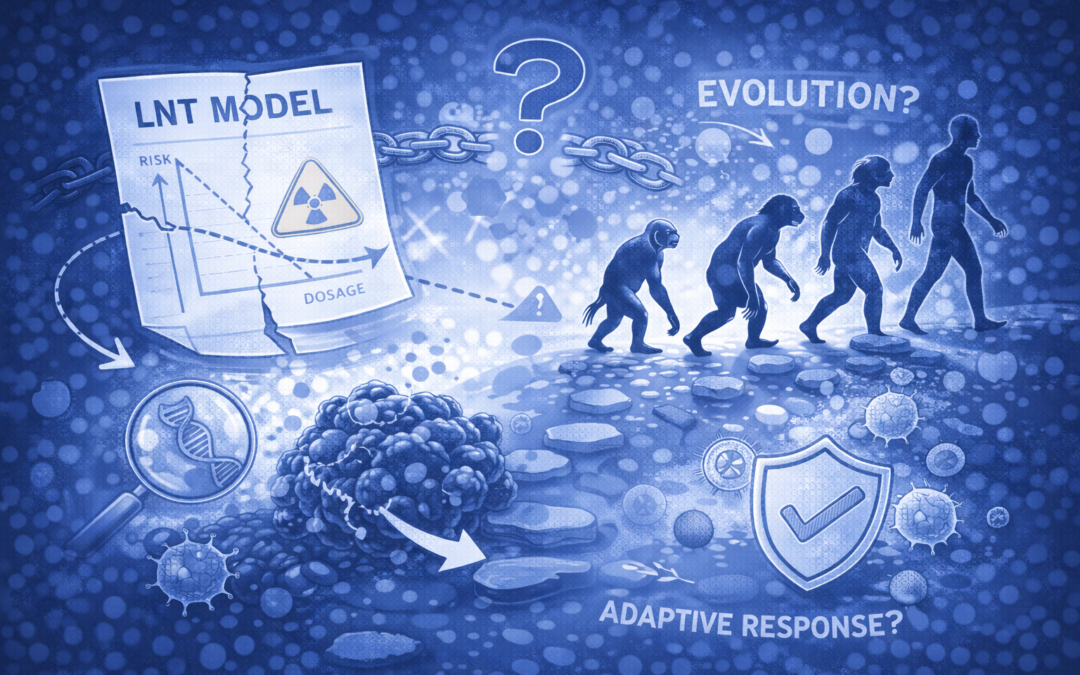
Evidence suggests that responses at low doses are not linear with dose — meaning the relationship between exposure and effect isn’t simply proportional. Instead, adaptive and compensatory mechanisms contribute to complex dose–response dynamics that can’t be captured by simple extrapolation from high-dose data.
• Implications for risk assessment:
Because low doses engage dynamic biological regulation — including repair, signaling, and homeostatic adjustment — the authors suggest that models assuming linear increases in risk with dose may oversimplify real biological behavior. Incorporating mechanistic understanding may lead to more realistic risk evaluations and inform both regulatory decisions and public communication.
Please click here to read the full research article:
https://link.springer.com/article/10.1007/s00204-009-0412-4 ← original research article